
How Closet Presentation Influences Buyer Perception
Buyer behaviour in the United States shifts noticeably when storage feels ordered, accessible and easy to understand. Research from the National Association of Home Builders shows a walk-in closet in the primary bedroom ranks as the most desired feature among new home buyers, which signals the weight buyers place on visible storage quality.
Clear shelving, precise spacing and clean sight lines reduce visual load during a showing, which helps buyers estimate functional capacity without distraction. This is where intentional closet staging supports decision-making. Buyers pause at closets because the space gives clues about how the home has been cared for and how easily they can use the storage in their daily routine. Effective closet staging ideas help the space read as structured and purposeful, which strengthens confidence during the evaluation of storage across the home.
Also Read: Entryway Staging Ideas
Foundational Closet Staging Ideas Every Seller Should Begin With
Removing Extra Items
A closet holds shape better when only the essentials remain. Lightening the load exposes the depth of each shelf and gives buyers a cleaner view of the interior lines. This small change often influences how early closet staging ideas land during a showing.
Using One Style of Hanger
Consistent hangers steady the look of the rod and prevent the slight visual wobble created by mixed shapes. Buyers read the run of clothing more easily when the hardware does not fight for attention.
Keeping the Floor Unobstructed
An open floor helps buyers understand how they might circulate within the space. It also allows them to picture storage additions without guessing around clutter.
Grouping Clothing by Use
Simple grouping helps the closet feel intentional. Buyers can sense whether the layout supports daily movement, which is a practical element of closet staging that carries more weight than many assume.
Containing Loose Accessories
Small items drift into view when left uncontained. A few neutral bins calm the profile of the shelves and help the storage feel more capable when staging closets for a home sale.
Also Read: Family Room Staging Ideas
Staging a Master Closet to Convey Space, Order, and Ease
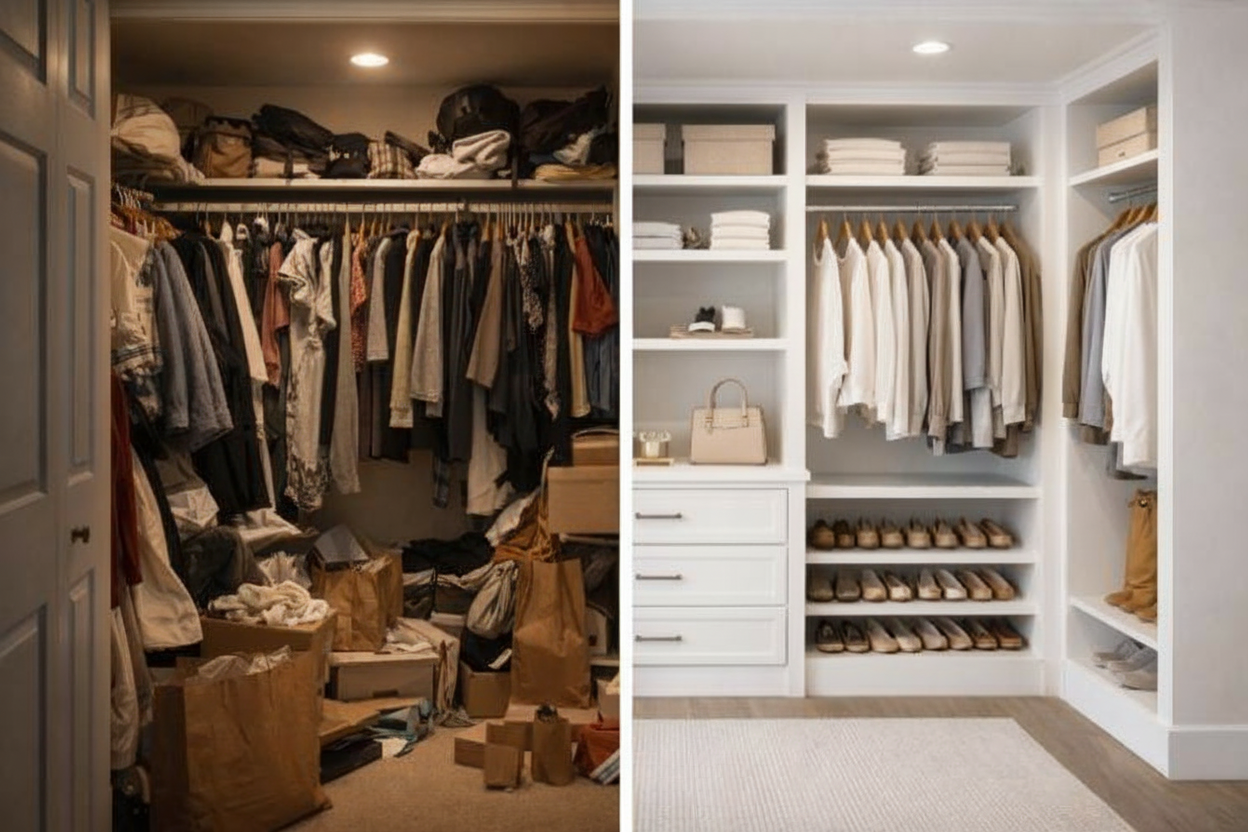
A master closet tends to carry more weight during a showing because buyers study it to understand daily usability, long-term storage flow and overall organisation.
Clarifying Long Hang and Short Hang Zones
Clear separation helps buyers read vertical capacity and understand how different garment lengths influence available rod space.
Strengthening Light Distribution
Upgrading a dim fixture improves colour accuracy and reduces shadows along shelving, which supports clearer interpretation of staging a master closet during a walkthrough.
Balancing Shelf Loads
Evenly spaced stacks prevent visual sagging and help buyers estimate the usable depth of each shelf with more confidence.
Positioning Footwear in Simple Rows
A clean row reveals available floor area and helps buyers calculate potential expansion without clutter interference.
Smoothing the Presentation of Everyday Items
Organising belts, bags and seasonal pieces clarifies how well the layout performs, which strengthens the impact of broader closet staging ideas during evaluation.
Also Read: Front Door Staging Ideas
Closet Staging Ideas for Smaller and Secondary Storage Areas
Smaller closets influence buyer impressions more than many sellers expect, mainly because these areas show how well the home supports everyday circulation and routine storage behaviour.
Presenting Linen Closets With Predictable Order
Buyers look for symmetry in folded towels because neat stacks help them judge shelf depth and loading potential. Simple spacing reveals how many linens can be stored without crowding.
Structuring Hallway Closets for Efficient Reach
A hallway closet works best when buyers can read shelf height and reach zones quickly. Clear rows and consistent spacing support accurate assessment of everyday use.
Preparing Entry Closets for Quick Visual Scans
An entry closet benefits from a limited number of coats and a single shoe row. This allows buyers to interpret usable rod length and floor clearance with minimal distraction.
Clarifying Storage Logic in Secondary Bedrooms
Bedroom closets require steady organisation because buyers use them to evaluate long-term practicality. Order in these spaces strengthens the message behind broader closet staging.
Containing Loose Items to Preserve Shelf Geometry
Small containers prevent irregular outlines that disrupt shelf readings. This helps buyers interpret capacity more clearly when they consider how these closet staging ideas support functional planning.
Also Read: Light Staging Ideas
Technical Methods to Elevate Closet Capacity and Visibility
Small adjustments inside a closet influence how accurately buyers can read structural potential, especially when they evaluate storage with quick visual scans during a showing.
Adjusting Rod Height for Cleaner Vertical Flow
Setting the rod at an appropriate height steadies the visual line and helps buyers follow the fall of longer items. This clarity allows them to estimate where supplementary storage might work.
Calibrating Shelf Spacing for Even Loads
Shelf placement affects how buyers judge capacity. Balanced spacing prevents overstress on certain levels and improves the clarity of each shelf’s usable depth.
Improving Light Quality for Accurate Colour and Depth Assessment
Warm, high-lumen bulbs reduce shadowing along the walls and help buyers interpret the true depth of a closet, which strengthens the usability message behind thoughtful closet staging.
Using White Space to Support Visual Breathing Room
Leaving intentional gaps between items helps buyers interpret shelf geometry without the interference of visual compression. This also supports broader closet staging ideas during a walkthrough.
Placing Storage Aids Where They Support Natural Reach
Bins or soft containers work best when positioned within standard reach zones. This helps buyers understand how the layout can function during daily use and improves clarity when staging closets for home sale.
Also Read: How to Choose the Right Virtual Staging Software for Your Real Estate Listings
Issues to Avoid When Preparing Closets for Showings
Crowding Shelves Until the Surface Disappears
When shelves lose their visible surface, buyers cannot judge depth or condition. They want to see the material, the support rails and the spacing that remains for their own items, so an overloaded shelf sends the wrong signal immediately.
Using Hangers With Noticeable Size Variation
Large gaps followed by tight clusters make the rod look uneven, and buyers rely on the visual line of the rod to understand length. Consistent spacing helps them read the storage more naturally.
Letting Small Objects Accumulate Without Structure
Loose items drift into piles that interrupt the geometry of the shelves. This creates confusion during discussions about closet staging ideas, since buyers cannot see the full outline of the storage.
Keeping Poor Lighting That Flattens the Interior
If the light is dim or tinted, the back wall becomes harder to read. Buyers usually lean in to understand depth, and poor lighting forces them to guess instead.
Filling the Floor Until Movement Feels Restricted
A cluttered floor interrupts circulation and makes the closet feel smaller. This weakens the impact of careful closet staging, since buyers cannot see how the space might open up with better planning.
Conclusion
A closet does not invite much discussion, but buyers notice more than they let on. When the shelves sit neatly and the layout makes sense, it feels as though the home has been handled with patience, and that impression tends to stay with them. When shelves feel balanced and the space carries a sense of calm, buyers respond with more confidence and a clearer understanding of how the property can serve them. Strong staging choices guide that moment and help the home present itself with intention.
Elevate Your Closet Story With Deco
Deco’s virtual staging team can rebuild the visual foundation of any closet and turn storage into a clear selling advantage with thoughtful lighting, practical organisation and imagery that sharpens buyer interest.
FAQs
1. How can buyers judge a closet’s usefulness during a showing?
Most people just open the door and stand there for a moment. They picture where their things might go. They look at what they can reach and whether the space feels simple enough to use without adjusting much.
2. Do smaller closets require a different staging approach than larger ones?
Smaller closets show everything, even small mistakes, so it helps to keep only what explains the space. When buyers walk up to it, they want to understand the size right away without sorting through clutter in their minds.
3. How much do mismatched storage pieces affect buyer interpretation?
When containers do not match, the eye goes straight to the mix instead of the shelves. Buyers can get distracted by that and lose track of how much room the closet actually offers.
4. Why do buyers focus on the back wall inside a closet?
The back wall gives them a sense of depth. If it is easy to see, they understand the size right away. When it disappears, they guess, and guessing usually makes the space feel smaller.
5. Can a closet feel too organised during a showing?
Yes. If it looks like someone arranged every inch for a photo, buyers stop imagining real use. A neat setup works better because it still feels like a space someone could live with day to day.
Ready to transform your listings?
Experience the power of AI-driven virtual staging with Deco.


