
Why Staging a Family Room Shapes Buyer Decisions in the U.S. Market
In the U.S. market, buyers assess a family room within seconds, and that early read shapes how they view everything that follows. Agents in the National Association of Realtors survey noted 83% of buyers built clearer impressions when rooms were staged, and 37% pointed to the living or family room as the space that shaped interest early. Those figures make sense when most viewing begins on a phone screen and buyers rely on room scale and light cues to decide whether a property deserves a visit. Well-prepared rooms also contributed to stronger offer ranges in roughly 29% of cases. Using measured family room staging ideas helps buyers interpret the room without hesitation.
Also Read: Front Door Staging Ideas
Foundations of Effective Family Room Presentation
Clear Surfaces and Neutral Elements for Broad Appeal
A family room communicates scale more clearly when surfaces stay open and the palette sits in a quieter range. This makes the room easier to photograph and gives any set of family room staging ideas a cleaner base to work from. Small shifts in visual load change how buyers judge depth and usable wall length.
Furniture Placement for Defined Use and Easy Movement
A layout should explain where people would sit, converse or pass through without interruption. When planners respect traffic width and viewing angles, the room feels more coherent. This pattern shows up repeatedly in professionally staged family rooms where circulation becomes a guiding principle rather than an afterthought.
Light Control and Layering for Strong Visual Impact
Light direction influences how corners register in a photo and how colors hold their tone. A layered approach steadies exposure during listing photography and supports accurate previews for buyers who study images closely before requesting a tour.
Proportion, Spacing and Measured Visual Weight
Proportion speaks quickly. Furniture sized to the room prevents compression and keeps the eye moving along longer sightlines without strain.
Material Choices for Texture and Realistic Finish
Materials with a gentle texture help cameras pick up detail without harsh reflection. Pieces chosen with this in mind strengthen the overall rhythm of family room staging and prepare the space for any later use of family room virtual staging ideas during digital marketing.
Also Read: Light Staging Ideas
Practical Family Room Staging Ideas Used in Real Homes
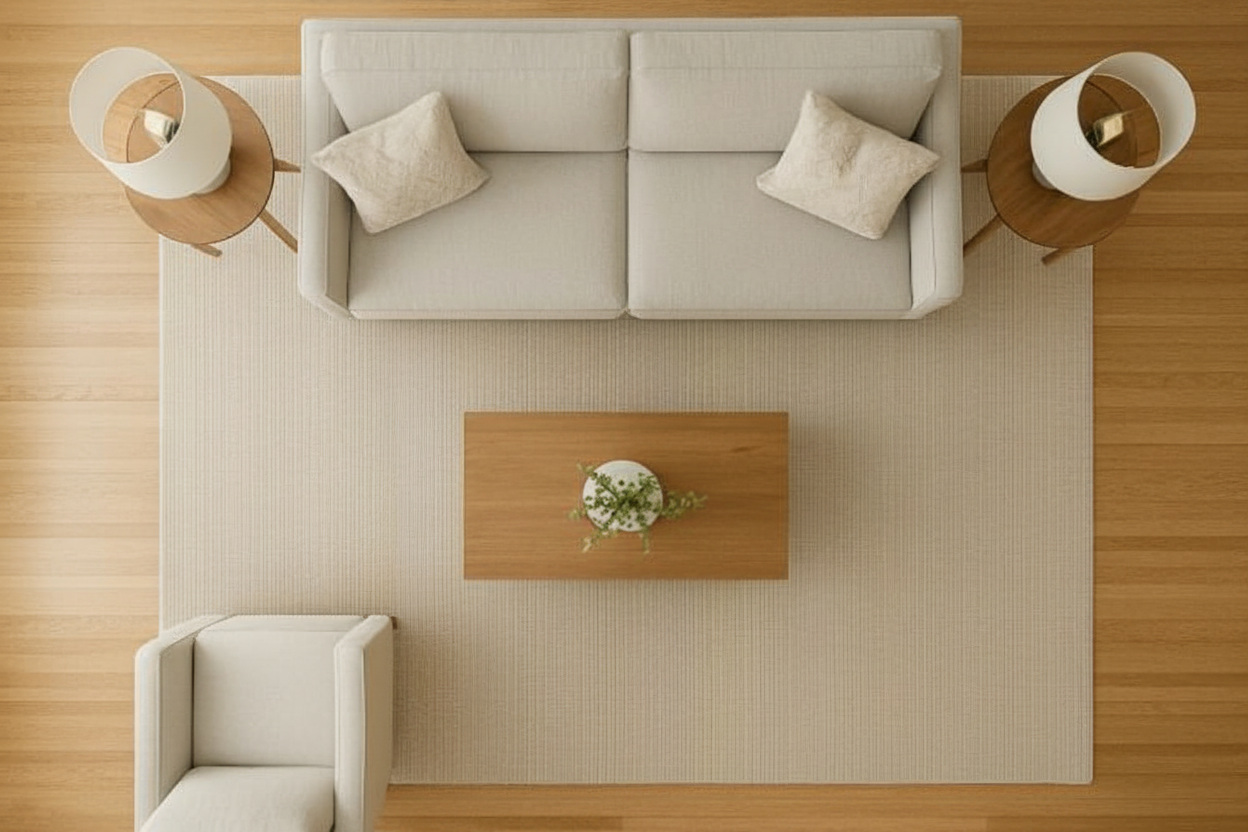
Scaled Furnishings for Accurate Room Proportions
Planners begin with the room’s true footprint. When the seating height, depth and span sit in a sensible relationship to the longest wall, buyers read the room without guessing. This grounding also leaves space for broader family room staging ideas that support real circulation patterns.
Color Harmony, Texture Layers and Balanced Composition
Color temperature affects how cameras interpret edges. Texture carries light differently and helps the room hold its shape in photos. Balance matters more than the individual objects.
Feature Highlights Through Clean, Purposeful Styling
Fireplaces, alcoves and window lines guide the first scan. Light styling prevents these elements from disappearing behind decorative noise.
Strategic Use of Secondary Seating and Modular Elements
A single chair in the right place can explain more about routine than a large sectional. Modular pieces reinforce this flexibility.
Measured Accessory Placement for Visual Clarity
Accessories chosen for finish and distance from each other help the lens pick up detail. This supports the wider rhythm of family room staging without weighing the room down.
Also Read: How to Choose the Right Virtual Staging Software for Your Real Estate Listings
Family Room Virtual Staging Ideas for High Quality Listing Images
Strong Base Photography for Clear Digital Enhancements
Virtual work only succeeds when the base image is clean. Photographers usually aim for a level horizon, controlled exposure and enough ambient light to avoid noise in darker corners.
Digital Furniture and Decor Aligned With Room Style and Size
Editors match furniture scale to the original architecture. A room with a low ceiling calls for restrained profiles, while wider rooms accept deeper seating.
Added Layers for Realistic Warmth and Visual Depth
Small digital elements, such as shadow correction or gentle textile texture, help the render sit more convincingly inside the existing frame.
Neutral Color Direction for Broad Buyer Appeal
Color decisions lean toward quiet palettes because stronger tones can shift once the file is compressed across listing platforms.
Consistent Visual Logic Across Multiple Images
Every angle needs the same vocabulary. This steadiness supports the wider rhythm of family room virtual staging ideas and keeps the presentation aligned with broader family room staging objectives.
Also Read: What are the Common Mistakes to Avoid in Virtual Home Staging?
Choosing Between In-Person Staging and Virtual Room Preparation
Cost Structure Relative to Listing Goals
Budgets differ widely, so the choice often begins with cost modeling. Physical work involves labor, transport and rental cycles, while virtual work concentrates cost inside the editing process.
Property Type and Expected Buyer Profile
Smaller condos and mid-sized homes can benefit from virtual scenarios, since buyers in those segments study online photography very closely. Larger homes with complex floor plans may require real family room staging to clarify movement.
Timeline and Market Pressure
Short lead times favor virtual preparation because editing can be completed within hours when the photography is sound.
Condition of the Existing Interior
Rooms with wear, uncoordinated finishes or heavy pieces respond better to virtual approaches since editors can remove elements without structural work.
Need for Multiple Visual Interpretations
Some listings benefit from two or more layout ideas. Virtual work allows editors to create alternate arrangements, which support broader family room staging ideas during early marketing.
Also Read: Master Bedroom Staging Before and After
Common Staging Errors to Avoid During Presentation
Trend Heavy Selections That Overpower Scale
Some rooms lose their natural proportion when the decor leans too strongly toward trend-driven shapes or saturated prints. The camera exaggerates these choices and the room shrinks on screen.
Traffic Paths Blocked by Oversized Pieces
Movement through the room should remain predictable. When a chair interrupts the natural turn from one zone to another, buyers sense the restriction immediately during a walkthrough.
Uneven Light Across Primary Viewing Angles
Light that drops too sharply in one corner alters depth. Balanced lighting preserves the room’s geometry and supports clean imaging.
Digital Elements Placed Without Structural Logic
Virtual add-ons have to respect sill height, window spread and ceiling pitch. If they drift away from real architecture, viewers notice the mismatch.
Visual Noise That Competes With Core Features
Objects placed without intention can bury the actual anchor points. A quieter field helps the structure show cleanly and strengthens how family room staging performs in photographs and in person.
Wrapping Up
A family room carries more interpretive weight than most sellers realize. Buyers read scale, circulation and light within seconds, and those early impressions guide how they approach the rest of the home. When the room is prepared with intention, its structure becomes easier to understand and the photography holds steadier across platforms. Physical preparation gives the room its baseline, while careful virtual work extends the story for buyers who rely on screen based evaluation before they ever book a showing. The principles outlined here are not shortcuts. They simply reduce noise and let the architecture speak, which is ultimately what helps a family room support a stronger, more informed buyer response.
Strengthen Your Listing With Deco’s Visual Expertise
Deco can build precise virtual versions of your staged room, keeping scale honest and light consistent so your listing earns attention the moment buyers see it.
FAQs
1. Why do some staged family rooms include only one large art piece?
A single piece steadies the wall and prevents scattered sightlines. Buyers read the room more easily when one clear anchor supports the proportions instead of several competing elements.
2. How does the placement of a television influence family room staging choices?
Television height and viewing distance shape furniture orientation. When these points are set correctly, buyers can picture daily use without struggling to imagine where seating or lighting would realistically sit.
3. What makes a coffee table important during family room staging?
Its footprint helps buyers estimate usable space around seating. A table sized with care shows circulation more clearly and keeps the layout from feeling cramped during a showing.
4. Why do agents adjust curtain length before photographing a family room?
Curtains touching the floor elongate the wall and guide the eye upward. This quiet adjustment helps the room read taller and steadier in photographs and during in-person tours.
5. How can greenery influence buyer perception in a staged family room?
Greenery softens harder edges and gives the camera a natural transition point. When used sparingly, it signals freshness without crowding the room or distracting from architectural cues.
Ready to transform your listings?
Experience the power of AI-driven virtual staging with Deco.


