
How Entryway Staging Shapes Buyer Impressions
Buyer perception begins almost immediately after they cross the front door, and the entry sets the reference point for how the rest of the interior will be judged. Research from the National Association of Realtors shows that 83% of buyer’s agents believe staging improves a buyer’s ability to visualise the home. This aligns with behavioural patterns seen across US residential showings, where early visual clarity reduces hesitation during the walk-through.
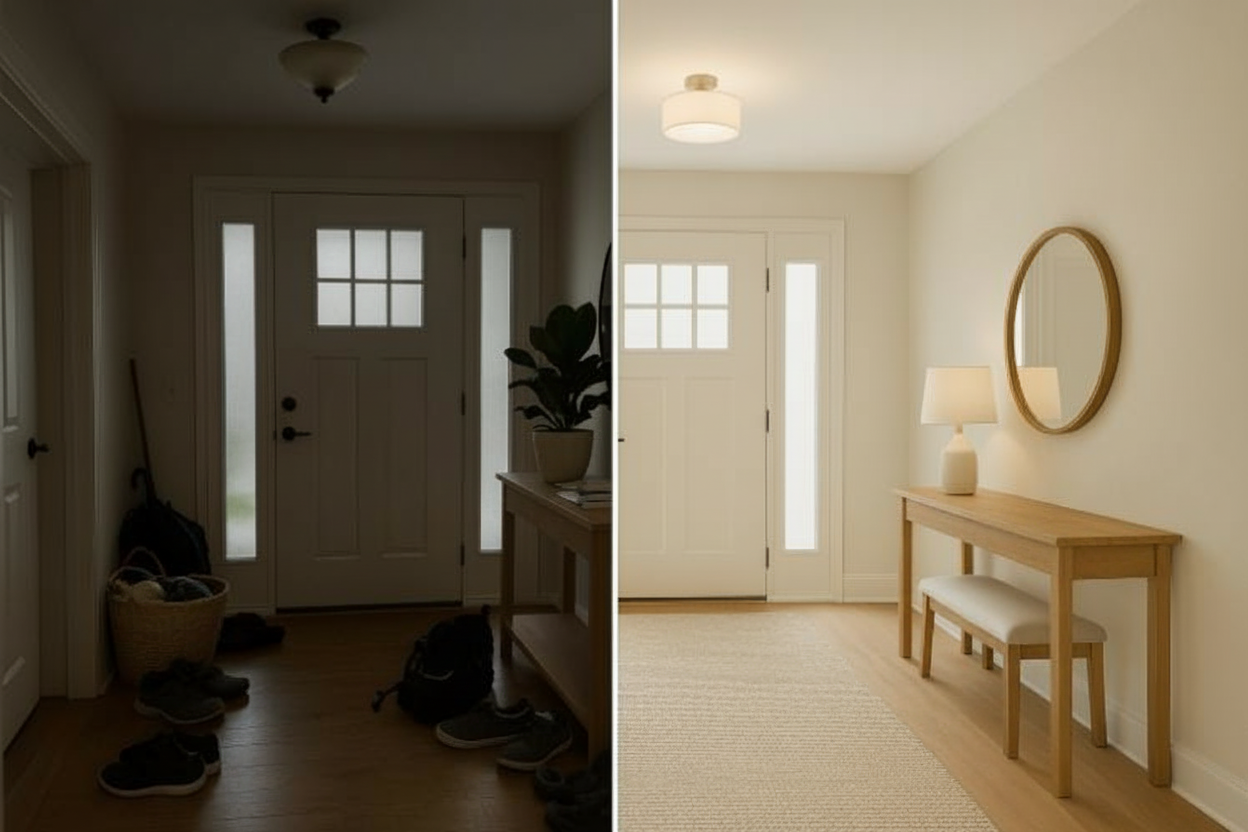
When sellers introduce focused entryway staging ideas, they guide the eye toward clean lines, balanced light and clear circulation. Effective entryway staging removes visual noise and supports faster interpretation of scale, which helps buyers read the property with more confidence as they move deeper into the layout.
Also Read: Family Room Staging Ideas
Core Principles for Staging an Entryway With Precision
Keep the Layout Open for Steady Movement
Most buyers step inside and make a quick adjustment of posture to understand where the space leads. If the entry feels crowded at that moment, their sense of scale shifts downward. Leaving enough room for an easy turn or a short pause near the door helps them settle into the layout without discomfort.
Use Neutral Visuals for Broad Appeal
Color influence is stronger in entry spaces because the light changes from the exterior to the interior within a few feet. Softer neutrals reduce this transition and create a more stable reading of height and depth. This steadiness supports a broad range of entryway staging ideas without pulling attention toward specific décor choices.
Choose Scaled Furniture for Correct Proportions
A single piece placed with intention works better than multiple items competing for attention. Buyers should feel the form of the foyer first. Compact furniture preserves that clarity during entryway staging and keeps the architectural lines visible.
Prioritise Balanced Illumination for Clear Viewing
Light spread near an entry can be uneven because ceilings vary and natural light drops quickly. Consistent illumination brings the surfaces into focus and reduces guessing about the condition.
Guide Buyer Attention With a Defined Visual Anchor
A focal point steadies the viewing path. During staging an entryway, one well-chosen element helps buyers orient themselves before moving deeper inside.
Also Read: Front Door Staging Ideas
Lighting Approaches for High Impact Entryway Staging
Strengthen Ambient Illumination for Clear Orientation
Entry lighting needs to stabilise the buyer’s eyes as they adjust from outdoor brightness. A ceiling fixture with an even spread helps them read height and wall condition without strain.
Use Task Lighting to Support Directional Flow
A table lamp or a narrow floor source can guide movement toward adjoining rooms. This gentle pull works well during entryway staging when the layout shifts quickly to a hallway or stair.
Position Mirrors for Wider Light Spread
Mirrors multiply available light and correct uneven patches near corners. The placement should match the primary sightline rather than sit purely as décor.
Align Natural Light With Interior Fixtures
Color temperature shifts can distort photography and in-person viewing. Matching bulbs to the daylight entering the foyer produces a cleaner interpretation of finishes.
Apply Measured Light for Keyword Integration
Balanced lighting strengthens how entryway staging ideas appear in photographs and helps buyers interpret the space with less distraction during staging an entryway.
Also Read: Light Staging Ideas
Storage and Organization Ideas for Cleaner Entryway Presentation
Introduce Functional Storage With Minimal Bulk
Small foyers lose clarity when storage pieces dominate the footprint. A bench with concealed capacity or a narrow cabinet keeps the space workable without disrupting the circulation path that buyers follow during entryway staging.
Keep Surfaces Sparse for Clear Readability
Entry surfaces behave like visual checkpoints. A single tray or a restrained accessory helps buyers register proportion and finish quality without unnecessary visual weight.
Prepare Coat Closets for Buyer Review
Closets near the entry are opened frequently during showings. Reducing volume by half creates a more accurate reading of depth and shelf spacing, which matters in regions where outerwear storage is essential.
Use Vertical Space for Light Organisation
Hooks or slim rails positioned at a consistent height control clutter and keep movement unobstructed.
Support Entryway Flow With Measured Styling
Calm organisation strengthens how entryway staging ideas read in photographs and reinforces the first impression during staging an entryway.
Also Read: How to Choose the Right Virtual Staging Software for Your Real Estate Listings
Entryway Staging Ideas for Instant Visual Lift
Establish a Single Focal Element
Most buyers glance toward one point first, even without realising it, so giving the eye a calm anchor helps them settle into the space. A mirror or a quiet artwork usually guides that moment without overpowering the room.
Add Texture Through Rugs and Soft Layers
Rugs do more than soften the floor. They influence acoustics and give the entry a steadier footing. A rug sized to the walkway helps the buyer understand the footprint more accurately, which supports clearer entryway staging ideas.
Use Greenery for Scale and Rhythm
A plant with measured height introduces a gentle shift in tone. It breaks the hard lines of the foyer and shapes the first few seconds of entryway staging.
Refresh Hardware and Small Finishes
Small touchpoints signal maintenance habits. When these elements feel current, buyers read the space as cared for.
Integrate Light Decorative Elements With Restraint
A single curated object can shape orientation during staging an entryway, provided it sits quietly within the composition.
Also Read: What are the Common Mistakes to Avoid in Virtual Home Staging?
Frequent Errors During Entryway Staging to Avoid
Placing Furniture That Interrupts Natural Movement
When a buyer steps inside, they instinctively test how much room they have to shift their weight or turn toward the next space. A piece that intrudes even slightly into this path can make the foyer feel tighter than it is, which limits the effect of entryway staging.
Letting Light Fall Unevenly Across Surfaces
Entries change light quickly as buyers move from the exterior into the interior. If one corner sinks into shadow, the eye lingers there and the overall read of proportion becomes less reliable. Balanced spread supports clearer entryway staging ideas.
Leaving Personal Items Near the Line of Sight
Everyday objects pull attention away from scale and finish quality, which weakens the goal of staging an entryway.
Using Objects That Carry Excess Visual Weight
A heavy sculpture or oversized vase can dominate an otherwise modest area.
Overlooking Minor Repairs Around Touchpoints
Small imperfections near the door frame distract buyers at the exact moment they begin forming an opinion of the interior.
In Summary
A well-prepared entryway shapes how buyers interpret every space that follows, and this influence begins long before they consciously evaluate finishes or square footage. Clear light, controlled movement and calm organisation give the mind fewer adjustments to make, which means buyers settle into the home with greater ease. When sellers apply entryway staging ideas with this level of intention, the foyer stops being a simple pass-through and becomes an orientation point that strengthens the overall presentation. Even modest adjustments can shift the first impression toward clarity and confidence, which is the outcome most sellers aim for.
Bring Your Entryway to Life With Deco
Use Deco’s virtual staging to present a sharper, cleaner entryway that communicates scale, balance and flow. The service helps buyers see potential long before they visit in person.
FAQs
How can flooring influence a buyer’s first impression of an entryway?
Flooring sets the visual temperature immediately. Clean seams, even reflectance and a rug scaled to the walkway help buyers understand proportion and overall care before they move deeper inside.
Do scent and airflow matter during entryway staging?
Yes. A mild, neutral scent and steady airflow reduce sensory distractions. Buyers focus more easily on light, materials and proportion when the environment feels calm and well-ventilated.
Should artwork be used in a narrow entryway?
One restrained piece works well. It introduces orientation without crowding the passage. Oversized art reduces perceived width, so scale and placement matter more than stylistic complexity.
Can a small entryway still support meaningful staging choices?
It can. Measured furniture, clear surfaces and consistent lighting give even compact foyers enough clarity for buyers to read proportion and movement accurately during their first steps inside.
How important is door hardware in shaping buyer perception?
Buyers pay attention to hardware earlier than most sellers realise. When the handle moves smoothly and the finish looks cared for, it signals steady upkeep and shapes how they read the rooms that follow.
Ready to transform your listings?
Experience the power of AI-driven virtual staging with Deco.


