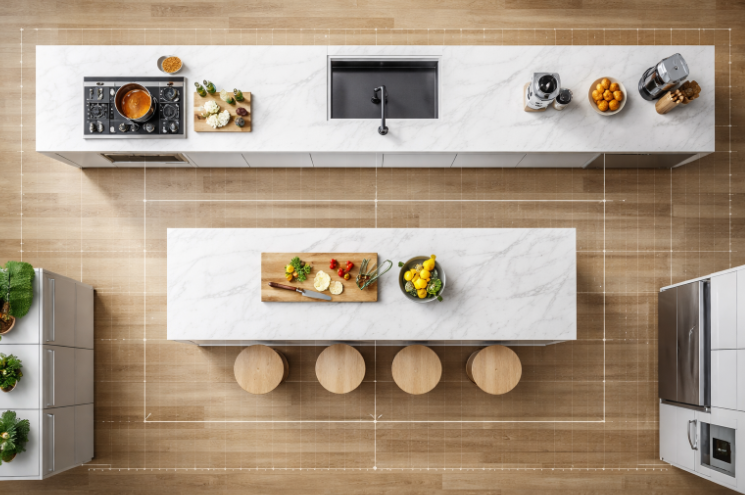
Across the United States, the kitchen keeps drifting closer to the center of everyday living, which makes kitchen layout design feel less like a styling choice and more like a planning exercise. The US Census Bureau noted that roughly 65% of new single-family homes now include open kitchens that sit beside larger shared rooms. That one detail changes how people think about movement, noise, and even how heat spreads during long cooking sessions. Data from the National Association of Home Builders also shows that layout changes remain a major reason homeowners renovate, mostly because older plans rarely match how families use their kitchens today.
Also Read: Front Door Designs for Houses: Modern, Classic & Stylish Ideas
When designers begin mapping a room, they measure real walking paths and appliance clearances before anything else, since small spacing errors can create awkward corners that no finish can fix. Many current kitchen layout design ideas start with that kind of scrutiny, and it is the reason the best kitchen designs feel balanced even in busy households.
Core Principles Behind Effective Kitchen Layout Design in US Homes
Mapping Real Movement Patterns
When designers in the United States study a kitchen, they start by watching how people naturally move through the room. They look at the stretch between the chopping space, the sink, and the range, because those steps create the baseline for efficiency. A layout that forces long detours or tight turns wears people down over time, so this early mapping becomes the anchor of the entire plan.
Defining Zones With Practical Boundaries
Many households follow mixed routines. Someone might be boiling pasta while another person rinses produce, which means the room needs boundaries that keep tasks from colliding. Instead of relying on old templates, professionals break the room into zones shaped around what the family actually does. This approach usually produces steadier results than forcing a kitchen into a preset pattern. It also helps shape the kitchen layout design ideas that homeowners explore during early planning.
Establishing Safe and Comfortable Clearances
Technical dimensions matter in every US kitchen. If aisles shrink once appliances are installed, the space becomes uncomfortable very quickly. Designers measure appliance swings, walking space, and turning radii with careful attention, since these numbers determine whether two people can work together without getting in each other’s way.
Positioning Storage Around Task Sequences
Storage is more than cabinetry. Its placement decides how smoothly a cooking session unfolds. Items used daily must sit close to the prep area, while heavier pieces need stable, low storage. This sequencing prevents unnecessary lifting and awkward reaches.
Planning for Ventilation and Heat Behavior
American kitchens that flow directly into living areas require careful ventilation planning, because warm air and moisture do not stay contained. Designers look at how the hood pulls, how air travels, and how far the cooktop is from seating. Getting those pieces right brings the space closer to the best kitchen designs that function well beyond appearances.
Also Read: Dining Table Centerpiece Ideas for Modern & Stylish Homes
Common Kitchen Layout Types Used in Modern US Homes
One-Wall Configuration in Compact Homes
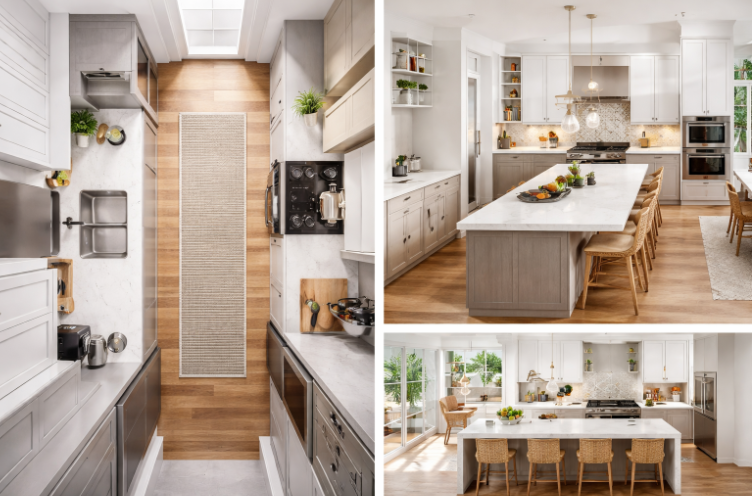
In smaller American apartments or converted spaces, designers sometimes rely on a single-wall arrangement because it concentrates water, power, and ventilation along one plane. This approach works only when the room can support a long enough counter span to keep preparation and cooking tasks from crowding each other.
Galley Layouts for Narrow Footprints
Older US homes and many urban remodels still use galley kitchens. Two parallel runs allow efficient movement if the aisle width is measured correctly. Designers often widen the passage slightly during renovations to prevent conflicts when appliances are open or when two people pass through at the same time.
L-Shaped Planning for Open Rooms
The L-shape remains a steady choice in American homes where the kitchen blends into a larger living zone. The shape provides a natural corner for preparation work, and it leaves enough room to incorporate an island without interrupting circulation.
U-Shaped Designs for Heavy Cooking
A U-shaped layout supports households that cook frequently. The three connected sides create a contained work environment, which works well when the room offers generous aisle space. Designers review appliance spacing carefully to avoid tight corners.
Island-Based Arrangements in Modern Builds
Many new US homes include islands because they offer additional storage, seating, and a clear separation between cooking and social activity. The success of this layout depends on maintaining comfortable walk paths around every side.
Peninsula Layouts in Transitional Homes
A peninsula acts as a partial divider in remodels where adding a full island is impractical. It extends surface area and storage while guiding traffic through the room without closing it off.
Also Read: Small Balcony Virtual Staging Ideas That Actually Convert Apartment Listings
Choosing the Right Layout for Different US Home Types and Lifestyles
Matching Layouts to Available Floor Area
In the United States, designers usually begin by looking at the actual square footage rather than jumping to a preferred layout. A narrow footprint may only accept a pared-down arrangement, while a broader room lets them test wider kitchen layout design options that handle traffic without feeling crowded.
Considering Household Cooking Frequency
Daily cooking places different demands on a kitchen than occasional meal prep. Households that cook regularly tend to need longer counter runs and stable task zones. Lighter routines create room for more flexible kitchen layout design ideas, especially when appliances do not need to stay within strict reach distances.
Evaluating Storage Demands
Storage becomes a deciding factor for many American households. Deep drawers, organized uppers, and steady corner access all influence the plan. Designers study how residents cook and shop before committing, since a mismatched storage plan can undermine the entire layout.
Accounting for Traffic and Social Use
Open American floor plans encourage people to pass through the kitchen even when they are not cooking. That movement shapes how seating is placed, how wide the walk paths need to be, and which areas stay clear during busy hours.
Adapting Layouts for Aging or Mobility Needs
Some homeowners plan ahead. They ask for reachable storage, easier appliance access, or slightly wider aisles, all of which influence long-term comfort.
Balancing Renovation Limits Versus Full Redesign
Older homes come with fixed plumbing lines, beams, or walls that cannot shift easily. Understanding those limits early helps define which choices fit within the best kitchen designs available for that specific structure.
Also Read: Modern Chandelier Designs for Living & Dining Rooms
Ergonomics, Clearances, and Spatial Planning Guidelines in US Kitchens
Working Heights That Match Real Use
Designers across the United States review counter height carefully, since a few inches can affect how long someone can prep without strain. Standard heights work for most households, yet adjustments happen when the primary users are taller, shorter, or have specific reach considerations.
Maintaining Comfortable Aisle Widths
Walk paths determine whether the room feels workable. Aisles that fall short restrict turning and limit appliance access. Wider paths help two people move at once, a priority in many modern American households where cooking becomes a shared activity.
Planning for Appliance Swing and Reach
Every appliance carries its own set of clearances. The room must allow doors and drawers to open without trapping someone or blocking traffic. Designers test these movements on paper and again on-site, because small miscalculations can create daily frustration.
Keeping Prep and Cleaning Zones Within Range
Ergonomics guides how far a person should reach for tools, ingredients, or waste points. Placing the sink too far from the main prep area slows work and encourages awkward movement patterns. A balanced relationship between these points forms the core of a functional room.
Managing Vertical Storage Comfortably
Upper cabinets serve their purpose only when they sit at a height that users can handle. Designers think about shoulder reach, step-stool dependence, and the weight of stored items. A poor decision here can strain the user or cause them to avoid the cabinet altogether.
Allowing Space for Future Adjustments
American households change over time. Flexible spatial planning makes it easier to shift appliances, add organizers, or extend storage without rebuilding the room. Thoughtful spacing becomes a quiet investment in long-term comfort.
A kitchen only works well when its structure matches the way people actually live, and that is true across many different American homes. Some rooms need a tighter workflow, while others benefit from space that encourages movement and conversation. When the plan supports those everyday habits, the room feels lighter to use and far easier to maintain. Good design also carries into the surrounding areas, which matters in open homes where the kitchen influences how the entire level functions. A clear look at proportions, reach ranges, and storage choices usually guides the plan toward something steadier and more comfortable. Thoughtful kitchen layout design work makes those decisions far less abstract, and the right interpretation of best kitchen designs can give a remodel or new build a stronger foundation.
Also Read: Best Balcony Staging Ideas for Apartments
Visualize Your New Kitchen with Deco
See your future layout in realistic detail through Deco’s virtual staging and make confident design decisions before renovation begins.
FAQs
How do you figure out if the layout is making everyday cooking harder than it should be?
Most people notice it during simple tasks. You start prepping something and realize you keep shifting items around just to find space, or you walk the same loop several times. When a small routine feels heavier than expected, the layout usually needs attention.
What should someone think about before shifting major appliances to a new position?
Before moving anything, check how far utilities actually reach and whether the new spot can handle heat, moisture, or weight. People sometimes pick a visually nice location, then discover the clearance or power load is wrong. A quiet inspection saves trouble later.
How can you sense whether the kitchen has enough circulation space without using formal measurements?
Stand where you normally prepare and picture another person walking behind you. If that image already feels cramped, the space is tighter than it should be. This small mental test usually gives a surprisingly honest read on how the room behaves in motion.
Ready to transform your listings?
Experience the power of AI-driven virtual staging with Deco.


