
Across many US apartment communities, the balcony is treated as a small but functional extension of the interior, and it requires a different kind of planning than a living room. Most balconies in mid-rise and high-rise buildings fall within a narrow size range, commonly 40 to 80 square feet, based on measurements used in leasing plans across major metros. That limited footprint forces careful decisions about furniture depth, door movement, and how much open floor area remains once pieces are placed. When people look through listings, a balcony that feels considered reads very differently from a balcony used as overflow storage, which is why strong apartment balcony staging ideas lean toward outdoor-rated materials, compact seating, and clear sightlines rather than decorative layering.
Also Read: Virtual Staging
Real estate advisors in the United States continue to track how buyers respond to staged elements in photos. The 2025 Profile of Home Staging from the National Association of Realtors reported that 83% of buyer’s agents observed improved visualization when listings were staged. That finding is relevant here because exterior areas appear in search results as static images, and clarity matters when someone is scrolling quickly through multiple properties. Staging will not transform a balcony, but it can help a viewer understand how the space can function without creating unrealistic impressions.
What Apartment Balcony Staging Focuses On
Exterior Conditions That Influence Every Decision
Apartment balconies in the United States behave differently from interior rooms because they follow exterior construction standards. Most balconies in multifamily buildings use concrete or composite floor slabs poured with a slight fall so water moves toward the drainage edge. That slope affects how items rest on the surface and how moisture collects under furniture or rugs. Staging must account for this, since anything that traps water or blocks the drain can create staining or slow runoff. Railings also follow safety requirements that restrict openings, which means staging cannot place climbable furniture against the perimeter. These factors create a technical framework that guides how the space can be set up.
Also Read: Virtual Staging for MLS Listings: What to Know
Materials That Hold Up Under US Weather Patterns
Staging on a balcony only works when the materials can tolerate the conditions seen in American climates, which range from freeze-thaw cycles in northern states to high UV exposure in the southwest. Outdoor-rated metals, resin pieces, engineered wood, and performance fabrics handle temperature swings and sun intensity better than indoor materials. These choices prevent premature fading, warping, or moisture retention, which would be visible in photographs and during viewings. When items are selected with this level of durability in mind, the staging reads as practical rather than decorative.
Visual Clarity Required in Listing Photography
Most real estate photographers in the United States rely on wide lenses to cover tight spaces, and those lenses amplify anything that interrupts the lines of a small balcony. Clean framing matters here. A narrow chair, a single table with a modest footprint, and a clear zone at the entry keep the camera from compressing the scene. When the area is arranged this way, the photograph reflects the true proportions of the balcony and avoids the visual squeeze that crowded setups create. The viewer can read the space as it is, and the image stays consistent with what they will find during a walkthrough.
Also Read: How Much Does Virtual Staging Cost in the USA?
Safety, Structure, and Weather Constraints That Influence Balcony Planning
Space Limits Seen in Many US Balconies
Balconies built for American multifamily housing rarely offer generous depth, and that single measurement dictates nearly everything that can be placed outside. A few inches lost to a bulky chair or a wide table can reduce the walkway to a narrow strip that looks awkward in photographs. When you work through apartment balcony staging ideas, the proportions of the slab matter more than the furniture style, because the camera exaggerates tight spaces far more than people expect.
Also Read: What Are the Best Ceiling Color Ideas for the Living Room?
Load Awareness in Standard Multifamily Construction
Structural engineers design these exterior platforms for predictable live loads, and although everyday furniture does not strain that allowance, concentrated weight from oversized planters or stone pieces can still create visual imbalance. Staging keeps heavier items spread out so the balcony looks properly supported. This quiet detail influences how viewers read the structure, even if they do not consciously register it.
Railing Safety Requirements in US Buildings
Railing assemblies in American apartments follow strict rules about height and openings, and they are not built to act as support points for climbing. Anything tall placed against the perimeter can unintentionally create a foothold. Staging keeps taller items inside the main footprint, which leaves the edge clear and preserves the intended safety line. This also keeps the exterior view open for the camera.
Also Read: Can I Pay Someone to Virtually Stage My Room
Restrictions Found in Rental and HOA Settings
Many buildings limit what residents can install outside, and those restrictions extend to staging. Fixed lighting, mounted décor, and open flame grills tend to be prohibited in rental agreements and HOA rulebooks. Temporary pieces that rest directly on the slab avoid these issues and remain consistent with the practical conditions residents work with across the United States.
Weather Exposure and the Need for Durable Materials
Balconies sit in open air, and exposure varies sharply from region to region. Sun in the southwest can bleach unprotected fabrics within weeks, while coastal humidity can warp untreated wood. Materials chosen for balcony staging ideas for small apartments work best when they tolerate these shifts without changing appearance midway through a listing cycle. Durable selections hold their color, resist moisture, and photograph consistently, which helps the space feel dependable rather than delicate.
Also Read: Does Virtual Staging Help Sell a House? A Clear Look at the Data
How to Plan the Setup of an Apartment Balcony
Identify a single-use
Balconies in US apartments handle only one clear activity at a time, and the layout works better when that activity is decided first. A reading corner, a small dining spot, or a light planting area each requires different spacing. Choosing one direction prevents visual conflict in photos.
Measure the Depth Before Selecting Furniture
Depth controls everything outdoors. A chair that works indoors can reduce circulation outside and distort the scene in wide lens photography. Accurate measurements keep the scale under control and prevent crowding.
Establish a Ground Layer
Most balconies use concrete or composite slabs, so a thin outdoor rug or removable tile can introduce texture without blocking runoff. This layer helps the space read as intentional while respecting the drainage slope.
Add Vertical Elements Carefully
Tall plants or a slim trellis add height without consuming floor area. These pieces stay inside the main footprint to avoid creating climbing points near the railing.
Place Lighting With Restraint
Soft solar or battery lights maintain visibility without altering building fixtures. Clean placement avoids wiring concerns and preserves a straightforward layout.
Also Read: Staging Closets for Home Sale
Balcony Staging Ideas for Small Apartments
Create a Compact Morning Corner
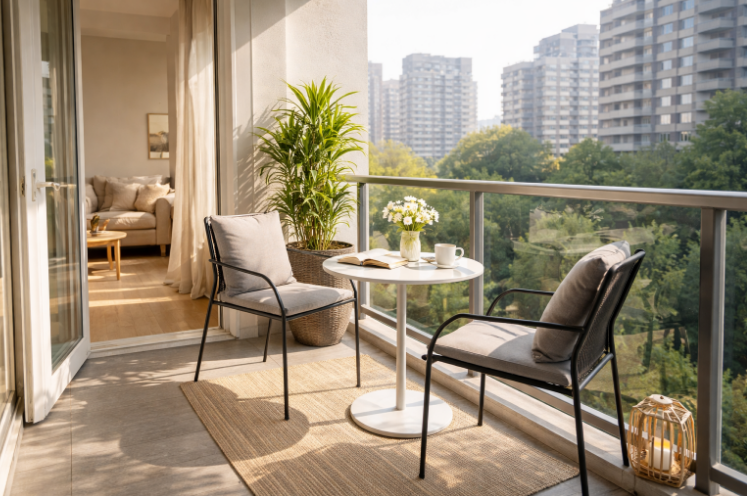
Small balconies in many US apartments only allow a narrow footprint, yet a light bistro setup can still work. Two lean chairs and a modest table offer enough structure for apartment balcony staging ideas without overwhelming the slab. This arrangement keeps the doorway clear and reads cleanly in photographs.
Use Slim Lounge Seating
A single lounge chair with an open frame helps the balcony feel steady and usable. When it is placed along the wall, the remaining floor area appears continuous, which supports clearer depth in wide lens images.
Build a Vertical Plant Cluster
Greenery can add presence without consuming ground area. A tall planter tower or a few grouped containers kept inside the main footprint maintain a tidy line near the railing. This protects sightlines while adding natural texture.
Add a Small Work Surface
A compact table placed close to the fixed wall can support reading or laptop use. This keeps circulation free and prevents the balcony from appearing congested.
Keep Décor Controlled
A single lantern, cushion, or light mat introduces character without visual noise. Measured choices maintain clarity, which is essential when working with limited square footage.
Also Read: Entryway Staging Ideas
Conclusion
Balconies in US apartments behave like small outdoor work zones, so the staging only succeeds when the choices respect how the area performs in daily use. Measurements guide nearly everything, and the material you place outside changes quickly with light and weather. When those details are handled with some care, the balcony holds its place in the listing instead of slipping past the viewer. Steady layouts, reliable materials, and practical apartment balcony staging ideas help the balcony support the home rather than distract from it. Even a modest slab can carry a reassuring presence when the proportions feel natural and the pieces fit without strain. That kind of clarity matters when people compare several apartments in a short time and rely on photographs to narrow their options.
Deco Virtual Staging for Outdoor Spaces
Deco builds balcony visuals that feel real, measured, and inviting. Elevate your exterior photos with staging that supports clarity and adds calm structure to your listing.
FAQs
How can I assess whether a small balcony can handle basic staging furniture?
Check the depth from the wall to the railing and measure the door clearance. Most US balconies accept only narrow chairs or a slim table. When the furniture leaves a clean walkway, the setup translates well in both photos and in-person viewings.
What type of outdoor fabric lasts longest on US apartment balconies?
Performance fabrics labeled for UV resistance and moisture control handle American climate swings better than untreated textiles. They resist fading, dry quickly, and hold their structure through heat, humidity, and light rain, which keeps the balcony looking steady during a listing period.
How do I prevent a small balcony from appearing darker in listing photos?
Avoid tall objects near the railing that interrupt exterior light. A clear edge allows daylight to reach the interior, which brightens both spaces in photographs. Balanced color choices and lighter materials help the camera read the balcony more easily.
Can plants be used without overwhelming a compact balcony?
Plants work when they are grouped thoughtfully. A few tall containers placed inside the main footprint maintain open travel space and avoid blocking the view over the railing. This method adds presence without crowding the slab or creating shadows that distort depth.
How do I decide where to place lighting on an apartment balcony?
Soft solar or battery lights placed along the interior wall usually provide even illumination without interfering with building fixtures. This position keeps the wiring minimal, avoids glare in photographs, and supports a calm, practical layout suited for small outdoor spaces.
Ready to transform your listings?
Experience the power of AI-driven virtual staging with Deco.


