
In the United States, front door designs for houses are defined as exterior building components that directly affect energy performance, structural efficiency, and entry security. According to the U.S. Department of Energy, air leakage through exterior doors can account for up to 30% of total residential heating and cooling losses when doors lack proper insulation or sealing. This places front doors within the broader building envelope, not just the visual façade.
Also Read: Dining Table Centerpiece Ideas for Modern & Stylish Homes
From a technical standpoint, modern residential entry doors are evaluated for insulation value, material stability, and resistance to environmental exposure. Fiberglass and insulated steel doors are widely adopted in U.S. homes because they deliver measurable thermal performance and lower maintenance compared to traditional solid wood assemblies. The U.S. Census Bureau reports that over 80% of American housing stock consists of single-family homes, making standardized front door design ideas essential for consistency across suburban and urban developments.
As a result, front door selection combines regulated performance expectations with architectural alignment and long-term durability considerations.
Also Read: Small Balcony Virtual Staging Ideas That Actually Convert Apartment Listings
What Defines a Front Door Design in Residential Houses?
A front door design in the United States is shaped by how the entire entry assembly performs once it is installed in a real home, not by the slab alone. Builders start with the frame, the hinge side, and the threshold because these pieces decide how the door carries weight, how it closes, and how it seals against the weather. A slight misalignment can increase air movement around the perimeter, so the design must consider how the door behaves through seasonal expansion and contraction.
The geometry of the door matters in a different way. Panel depth, stile width, and the size of any glass section influence the balance of the elevation. A narrow vertical lite changes how daylight enters a foyer, while a wider configuration shifts the visual weight of the façade. Materials complicate the picture further. Wood brings character but reacts quickly to moisture. Fiberglass and steel stay steadier, which helps maintain fit and finish over long periods.
In U.S. neighborhoods where most houses follow standard plan types, front door designs for houses work best when they combine structural stability with proportions that sit comfortably within the architecture. This blend is what ultimately defines the design.
Also Read: Modern Chandelier Designs for Living & Dining Rooms
Popular Front Door Design Styles for Houses
Modern Vertical-Lite Assemblies
Modern entries in the U.S. tend to follow a clean, quiet geometry where the slab carries most of the visual weight. A narrow vertical glass section is usually placed off-center, which creates a controlled daylight ribbon without weakening the structure. Builders pay attention to how the stile carries hardware because slimmer edges reduce surface for fasteners. These doors pair well with insulated cores, which help manage heat movement in mixed climates.
Flush Panel Doors With Minimal Relief
Some American homes use a flush exterior surface to keep the elevation simple. The design depends on the stability of the core, since any irregular movement shows immediately on a smooth face. Fiberglass and composite skins help maintain surface flatness, which is important for long entries or pivot systems. This approach suits contemporary façades where lines stay uninterrupted.
Traditional Panel Configurations
Classic homes, including Colonial and Craftsman styles, rely on raised or recessed panels. Each panel has its own expansion path, allowing the door to move without distorting. The geometry also breaks light across the surface in a way that feels familiar in older neighborhoods. These assemblies usually work with thicker stiles and rails, which improve stability and support heavier hardware.
Half-Lite and Three-Quarter-Lite Doors
These doors use glass in a way that feels measured rather than exposed. The upper portion brings in daylight and opens a view toward the entry path, while the solid lower section keeps the structure steady under regular use. The size and height of the glass panel influence how much heat or glare reaches the interior, which matters quite a bit on south-facing façades in many U.S. climates. People tend to pick this layout when they need privacy at eye level but still want natural light to reach the hallway. When a wider entry is planned, the design works smoothly with narrow sidelights without changing the overall look of the façade.
Transitional Mixed-Material Designs
A growing category in U.S. houses blends modern proportions with traditional depth. Wood-look fiberglass paired with a single geometric lite is common in renovations, because it updates the entry without overwhelming the façade. These front door design ideas work well in neighborhoods where homes vary in age and architectural language, allowing a door to act as a subtle connector rather than a focal point.
Also Read: Best Balcony Staging Ideas for Apartments
Front Door Materials and Their Design Impact
Solid Wood Doors
Wood behaves in a way that designers learn by watching it over a few seasons. The grain takes stain differently across each board, which creates a depth you do not get from synthetic skins. In many U.S. climates, the material shifts slightly as humidity moves in and out, so the design must account for that natural expansion. When the finish is maintained, the door holds its shape well and adds a weight that suits older architectural styles.
Fiberglass Skins With Insulated Cores
Fiberglass behaves almost the opposite of wood. It stays steady when the temperature swings, which is why many builders choose it for homes near the coast or in regions with long winters. The surface can be molded to show panel depth without the risk of splitting. Because the core is insulated, the design reads clean while the interior benefits from more controlled heat movement.
Steel-Faced Exterior Doors
Steel brings a quieter kind of precision. The surface rarely moves, so the geometry stays sharp even after years of daily use. This helps maintain the alignment of the lock and latch, which affects how the door feels when it closes. Homeowners in colder states tend to appreciate the thermal consistency, especially when the door sits on an exterior wall that loses heat quickly.
Engineered Composite Builds
Composite doors are built from layered materials that hold their shape when temperatures shift, which is why they behave differently from solid wood. This steadiness gives designers more freedom with proportions that might otherwise twist or cup, such as wide flat sections or taller, narrower layouts. The frame material at the edges tends to accept fasteners well, so heavier pulls and more complex locking systems stay aligned over time.
Mixed-Material Hybrids
Some front door designs for houses combine fiberglass, steel, and wood accents to match façades that don’t follow a single style. The designer chooses each layer for a specific reason: warmth from the wood, structure from the composite core, and durability from the metal. The result feels more tailored than factory-uniform, which helps during renovations where the entry needs to anchor the entire front elevation.
Also Read: DIY Bedroom Staging Ideas Under $100
Glass, Panels, and Visual Balance in Front Door Design
Full-Lite Glass Choices
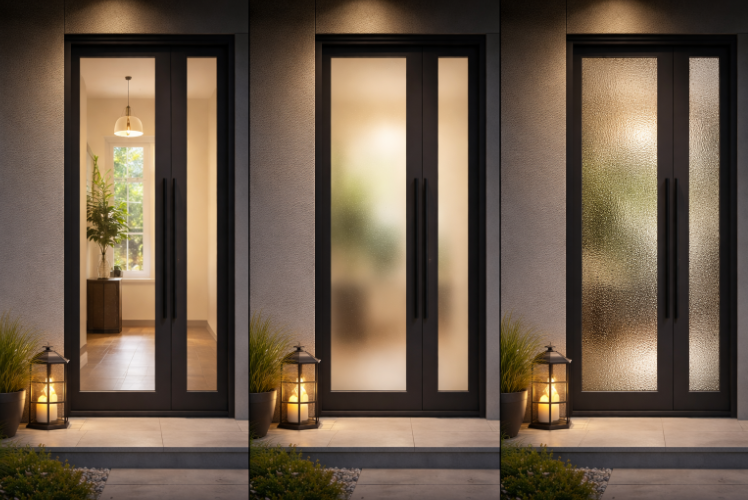
When the entire height is glass, the door begins to feel more like a window that happens to open. The interior brightens quickly, but the façade needs something around it to ground the opening so it doesn’t float visually.
Smaller Glass Sections
Some homes use a shorter glass panel instead, usually placed where light is needed most. The shape changes the whole entry, sometimes making a narrow porch feel wider simply because the eye catches the brightness.
Managing Privacy
People worry about visibility from the street, so textured or patterned glass is used to soften the view. It lets the light through without turning the foyer into a display.
How Panels Shape the Surface
Panel depth shifts the way shadows fall across the door. A shallow cut reads quiet, while deeper cuts make the entry feel more sculpted.
Finding a Visual Anchor
When glass occupies a large portion of the slab, the handle and lock carry more visual responsibility. Their placement steadies the composition so the door feels intentional rather than improvised.
Also Read: Virtual Staging for MLS Listings: What to Know
A front door sets the mood long before anyone reaches the threshold. You notice how the surface catches light, how the glass either reveals or withholds a glimpse inside, and how the proportions steady the entire elevation. These choices feel small on paper but grow more influential once they sit on a real façade. Homeowners often discover that the entry works best when its materials and geometry echo what the rest of the house is already trying to say. When that balance is found, even simple front door designs for houses can reshape how people read the space around them. The same applies to interiors, where thoughtful visuals guide how a buyer imagines living there. That is where staging, digital or otherwise, carries its value.
Bring the Vision Forward With Deco
Use Deco’s virtual tools to turn your front door design ideas into clear, convincing visuals that help buyers understand the home from the moment they see the listing.
FAQs
How does the surroundings of a property influence the way a front door should be designed?
A door reacts to whatever sits around it. Trees, reflected light, wind channels, and nearby structures all shape how much heat, shade, or moisture it faces each season. Design works better when the door responds to those conditions rather than ignoring them.
What helps a front door feel inviting without compromising the structure or performance?
An inviting entry usually comes from small choices: the height of the glass, the warmth of the finish, and how the frame meets the wall. These touches change the mood while keeping the door strong enough to hold alignment and resist daily wear.
Why do some front doors age unevenly, even when the materials are rated for exterior use?
Uneven aging often comes from micro-conditions around the entry. One side might get harsher sun, or the overhang may be too shallow to block rain. The door material is only part of the story; exposure and installation play the rest.
Ready to transform your listings?
Experience the power of AI-driven virtual staging with Deco.


