
Across the United States, small apartment balconies carry more weight in buyer decisions than their size suggests. Many buyers scroll through listings expecting to see some form of usable outdoor space. When the balcony looks cramped or unclear, interest drops fast. The National Association of Realtors reports that 73% of buyer’s agents believe listing photos heavily influence buyer interest, and this pressure lands squarely on spaces that already photograph poorly. Narrow balconies compress under wide-angle lenses, railings break up sightlines, and the viewer loses any sense of scale within seconds.
Also Read: Virtual Staging
This is where small balcony virtual staging ideas make a real difference for buyers who are trying to understand a tight outdoor area through a single photograph. Well-executed digital staging helps them read depth, assess seating possibilities, and picture everyday use while keeping the original structure intact. Research from the NAR notes stronger engagement when edited images stay honest and easy to interpret, which reinforces the value of a restrained approach. Virtual staging for small balconies gives apartment listings a clearer way to communicate how these compact spaces work in real life. In dense urban markets, balcony virtual staging for apartments provides buyers with enough information to judge whether the outdoor area supports practical use before they commit to a showing.
Why Small Balconies Are Hard to Market in Apartment Listings
Buyers Rely on Photos That Rarely Capture True Use
Agents across the United States know that a balcony can feel very different in person than it appears on a screen. The camera tends to favor the interior room, so the exterior area ends up pushed into the background. Depth flattens, corners blur, and the floor layout loses clarity. Most buyers scan through photos quickly, so anything that is not immediately readable gets dismissed before they consider how the space performs in everyday living.
Also Read: Virtual Staging for MLS Listings: What to Know
Building Layouts Introduce Visual Challenges That Cameras Cannot Correct
Many apartment buildings in US cities stack balconies vertically, which leaves lower levels with heavy shade throughout the day. The slab surface takes on darker tones, and the railing carries more visual weight than intended. When the light behaves this way, the camera struggles to separate the balcony from the wall plane behind it. The result is an image that hides important spatial cues buyers need to make sense of the area.
Empty Balconies Fail to Communicate Purpose During the First Viewing
A balcony that appears bare rarely captures interest during an initial listing review. Without any references that guide the eye, the viewer cannot tell whether there is room for a chair, a small table, or anything else that signals daily usability. Buyers in dense US markets value even modest outdoor access, yet many overlook it when the photo set offers no evidence of function. That early impression quietly influences how the entire listing is judged.
What Virtual Staging Solves for Small Balconies
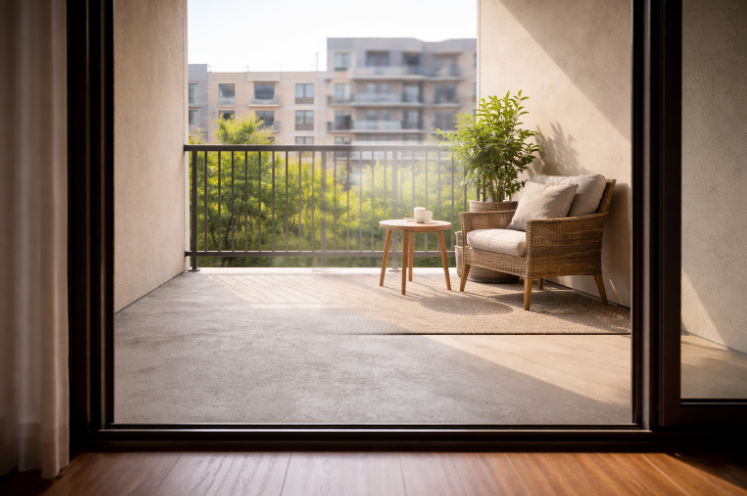
It Gives Buyers Something Concrete To Read
Anyone who has tried photographing a small apartment balcony in the US knows how easily the space loses its meaning on camera. With small balcony virtual staging ideas, you place a few grounded visual cues that help buyers understand where they could stand, move, or relax. Without those cues, the image feels unfinished and buyers scroll past it.
Also Read: How Much Does Virtual Staging Cost in the USA?
It Pushes Back Against Lens Distortion
Most listing photos lean on interior-friendly lenses, and those lenses rarely treat outdoor areas kindly. They stretch the room, pull the railing inward, and flatten the slab until nothing feels true. A staged layout brings back a sense of distance that the lens simply cannot provide on its own.
It Shows Furniture That Fits Instead of Furniture That Overwhelms
Buyers want to picture a realistic setup, not a fantasy. A well-chosen chair or a compact table signals that the balcony can support regular use without crowding the threshold. This matters in many US buildings where projections are modest but perfectly functional.
Also Read: What Are the Best Ceiling Color Ideas for the Living Room?
It Helps the Balcony Feel Connected to Daily Living
A balcony looks far more believable when the staging aligns with what buyers already see inside the unit. When the eye moves comfortably from the living room to the balcony, the space feels intentional rather than something tagged onto the listing.
It Gives the Outdoor Area a Reason To Be Considered
Empty balconies rarely compete with the rest of the photo set. Staging changes that. It tells buyers the space carries everyday value, and that simple clarity can nudge someone toward a showing request they might not have considered before.
Also Read: Can I Pay Someone to Virtually Stage My Room
Core Principles Behind Effective Balcony Staging
Begin With What the Space Can Realistically Carry
Every small balcony in a US apartment building behaves a little differently. Some have deeper slabs, some have tighter corners, and some lose part of the floor to HVAC placements. Before adding anything, the staging should respect those limits. When virtual staging for small balconies mirrors the proportions found in many multifamily units, buyers can read the space with confidence.
Leave Enough Room for Someone To Step Out Comfortably
A balcony loses credibility the moment the entry path feels blocked. Buyers look at that doorway first, because it tells them whether they would actually step outside without feeling crowded. Clear circulation reads immediately, even in a still image.
Also Read: Does Virtual Staging Help Sell a House? A Clear Look at the Data
Use One or Two Elements To Explain Distance
A small exterior area rarely needs a full arrangement. One chair angled slightly, or a planter placed against the far railing, can tell the viewer more about depth than an elaborate setup. The key is giving the eye something stable to measure against.
Work With the Light the Building Already Provides
Balcony light shifts across the day, especially in buildings where floors stack tightly. Staging looks far more believable when it appears in a place where sunlight or shade would naturally fall. Buyers recognize authenticity faster than most people expect.
Keep the Visual Language Consistent With the Interior
Buyers respond well to balcony photos that echo the look and feel of the interior. If the transition is jarring, the space loses coherence. A soft alignment of color and material helps the viewer picture a comfortable flow from indoors to outdoors.
Also Read: Staging Closets for Home Sale
Small Balcony Virtual Staging Ideas That Work in US Apartments
Use Seating That Matches How Americans Actually Live
Buyers want to picture themselves stepping outside with a coffee or taking a short break during the day. A single compact chair angled toward the railing communicates that possibility without crowding the floor. When balcony virtual staging for apartments reflects everyday habits instead of staged perfection, buyers trust the image more.
Keep Furniture Slim So the Floor Stays Visible
Small balconies lose impact when surfaces disappear under props. A narrow table or a light outdoor stool keeps the slab open, which helps buyers gauge how much room remains once someone stands or moves around.
Also Read: Entryway Staging Ideas
Introduce Vertical Elements That Don’t Close the Space
A tall planter placed against a side wall provides a sense of warmth without taking away the floor area. Vertical cues also help buyers read height and boundary, which listing photos rarely communicate well.
Use Textures That Photograph Clearly
Outdoor rugs with subtle patterns can guide the eye across the slab, especially in shaded urban buildings. Texture adds gentle definition without overpowering the photo.
Let the Railing Line Work as a Natural Frame
Balcony railings often interrupt the photo, but they can be used as a visual anchor. When furniture is placed thoughtfully, the railing helps outline the space and makes the layout easier to interpret.
Conclusion
Many buyers never fully understand what a small balcony can offer until they see it presented with intention. A photo alone rarely tells the story, because the camera trims depth, softens detail, and hides the parts of the space that matter in daily living. When small balcony virtual staging ideas are applied with a steady hand, the viewer finally gets a sense of how the balcony performs. They can picture a morning step outside, a quiet seat at the railing, or simply a place to breathe for a moment. That kind of clarity changes how the entire listing feels. It gives the exterior area a place in the buyer’s mind instead of letting it fade into the background. And when buyers understand the value of even a modest outdoor extension, they approach the rest of the home with a different level of interest.
A Balcony Seen the Way It Deserves
Deco can help your balcony photos feel honest, inviting, and clear, with staging that respects real proportions and everyday use. Let Deco turn a small balcony into a genuine selling point.
FAQs
What makes a small balcony difficult for buyers to understand in listing photos?
Buyers rarely get a fair read on a balcony from photos alone. Corners disappear, railings dominate, and the floor never looks as it should. Virtual staging gives the viewer something solid to read, which helps them understand the space without guessing.
How does virtual staging improve buyer confidence when evaluating compact outdoor areas?
Most buyers want to know whether they could step outside comfortably, even for a moment. Staging places familiar objects that calm that uncertainty. Once buyers see clear spacing and simple seating, they understand the balcony has everyday usefulness, not just visual appeal.
Why do empty balconies lose impact during online searches?
Empty balconies blend into the photo set because nothing guides the viewer’s attention. The space feels flat and unfinished. Staging adds a small anchor that invites a second look, giving buyers a reason to consider how that outdoor area fits into daily routines.
What type of staging helps buyers understand real movement on a small balcony?
Anything that hints at how a person might stand or move works better than decorative pieces. A chair angled toward the railing, or a slim table near the corner, gives enough reference for buyers to judge flow without needing exaggerated layouts.
How does virtual staging influence a buyer’s overall impression of an apartment?
Buyers connect strongly with outdoor access, even when the area is small. When the balcony feels clear and believable, the rest of the home sees a lift in perception. It signals comfort, not just space, which can shift the buyer’s interest meaningfully.
Ready to transform your listings?
Experience the power of AI-driven virtual staging with Deco.


