
Recent renovation research in the United States shows a clear move toward deeper bathroom projects rather than light refreshes. Market Data Forecast places the North American bath remodeling market at USD 72.23 billion for 2024, and the United States holds more than 89% of that activity. A large share of current work focuses on controlling moisture more effectively, which is why bathroom panelling ideas show up in so many project plans. Fewer joints create fewer weak points, and that matters in rooms that stay damp for long stretches of the day.
Houzz notes that more than 80% of homeowners updating bathrooms want surfaces that clean faster and resist humidity better. That shift pushes remodelers to consider bathroom wall panel ideas that stay stable under warm, humid conditions without interrupting the overall design. As layouts include larger wet zones, reliable wet wall bathroom ideas become part of the long-term performance strategy in many American homes.
Also Read: Front Door Designs for Houses: Modern, Classic & Stylish Ideas
What Bathroom Panelling Means in Modern Construction?
Bathroom panelling is not the same as decorative wall cladding used in living spaces. It is a structural wall finish that replaces tile or paint in moisture-exposed rooms. Panels behave as continuous surfaces, which reduces the number of joints where water can enter the wall. This makes them appealing for homeowners who want long-term stability and fewer maintenance surprises.
Understanding What Panels Do
Panels act as the visible barrier between water and the underlying structure. They also contribute to the overall look of the room by creating smooth planes of material. When used correctly, bathroom wall panel ideas can provide a more consistent finish compared to traditional tile and can simplify the installation timeline significantly.
Where Panels Are Typically Used
Panels are installed in showers, tub surrounds, half walls, feature walls and in some cases, entire wet room layouts. Each zone requires a slightly different approach because moisture exposure varies from one area to another.
Also Read: Dining Table Centerpiece Ideas for Modern & Stylish Homes
How Waterproofing Really Works Behind the Scenes?
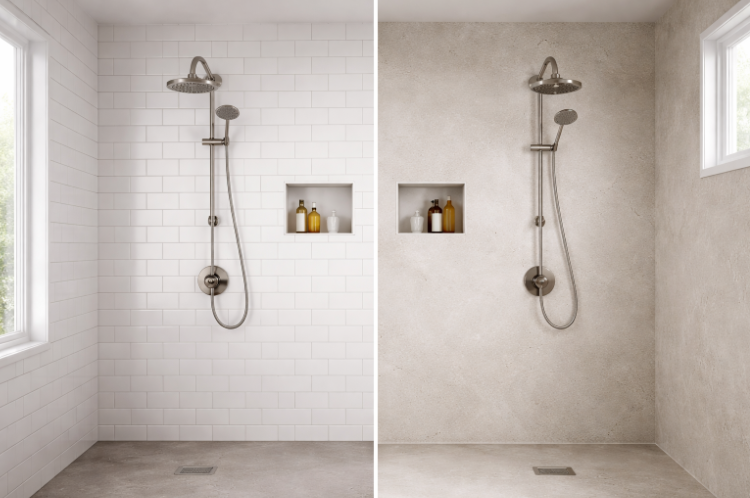
Waterproofing is a layered strategy. The panel is just a visible layer. What sits behind it does the heavy lifting. Some people think a waterproof panel is enough, but moisture has a way of finding small gaps. The system needs to handle both water splash and vapor movement.
Surface Behavior
Panels block most of the direct water, but this only works when edges and seams are sealed properly. A perfect panel with a weak joint still fails over time.
Substrates and Joints
Some panels require specific substrates. These substrates resist water in different ways. Cement-based boards do one thing, while engineered gypsum boards do another. If the installer pairs the wrong substrate with the wrong panel, the system loses its ability to resist moisture. This matters a lot for wet wall bathroom ideas, because those layouts bring water close to every surface.
Vapor Is Its Own Problem
Liquid water is obvious. Vapor is quieter but travels farther. A poorly ventilated bathroom traps vapor behind the panels, which leads to issues even if the visible surface looks fine. Good airflow and proper substrate choice help keep vapor from building up.
Also Read: Small Balcony Virtual Staging Ideas That Actually Convert Apartment Listings
Types of Bathroom Wall Panels Commonly Used in the US
Large Format Porcelain Panels
Porcelain panels feel solid and calm. They are made in long sheets that cover wide areas, so the wall ends up with very few seams. The material handles heat, heavy use, and cleaning products without much fuss. In many remodels, porcelain shows up when the homeowner wants a space that feels more architectural.
Installers need to be skilled at handling these oversized sheets. The weight and size make them tricky to move, but once installed, they deliver a finish that holds up for years. They suit showers and wet rooms especially well. These panels sit at the higher end of bathroom panelling ideas because they combine strength with visual impact.
Acrylic and Composite Panels
Acrylic and composite panels show up in a lot of family bathrooms because they are light, easy to handle and usually come in wide sheets that go up faster than most tile jobs. The surface stays smooth, so a quick wipe is usually enough to keep it looking fresh. Parents appreciate that there are no tiny joints collecting grime.
They hold up well in showers and tub areas since the material does not soak in water. Some versions try to look like stone or tile, though most people pick them for the clean finish rather than the imitation. When homeowners want bathroom wall panel ideas that keep maintenance simple, these panels tend to end up on the shortlist.
Fiberglass Reinforced Plastic Panels
Fiberglass reinforced plastic, or FRP, is a rugged panel option. It deals with constant moisture and regular cleaning without wearing down easily. You see it in commercial bathrooms, so people sometimes overlook it for residential spaces. That is changing, though, because FRP solves problems in high-traffic homes.
The material has a light texture and handles surface impacts well. It makes sense in bathrooms that get used by kids or guests. It is not always picked for decorative reasons, but it is reliable and predictable, which is useful when you want durability above everything else.
Also Read: Modern Chandelier Designs for Living & Dining Rooms
Waterproof Substrate-Based Systems
Some walls rely on a substrate first and the visible panel second. These systems treat the structure behind the wall as the true protective layer. Cement board, fiber cement and advanced gypsum products are common choices.
This approach works when you want a custom finish but still need strong moisture control. It supports the toughest wet wall bathroom ideas where water exposure is constant. The visible panel may be thin or decorative, but the substrate underneath keeps the system stable.
Choosing Bathroom Panelling By Bathroom Zones
Bathrooms do not get the same amount of water everywhere. The shower sees the most contact. The vanity area sees far less. Choosing panels correctly depends on how each zone behaves.
Shower Walls
These walls take full spray every day. They need materials that stay stable under direct water contact. Porcelain, composite sheets and waterproof substrate systems work best here.
Tub Surrounds
Tubs get splashes and humidity rather than a direct full spray. Acrylic panels fit well here because they resist moisture and clean easily.
Vanity Walls
These walls get occasional splashes and steam. Most bathroom wall panel ideas can be used here since the exposure is moderate.
Toilet Areas
These areas usually receive the least water, but still deal with humidity. Panels can tie the bathroom together visually while protecting the wall from moisture in the air.
Also Read: Best Balcony Staging Ideas for Apartments
Design Focused Ideas That Also Support Waterproof Performance
Vertical and Horizontal Choices
Vertical panels stretch the room upward. Horizontal ones widen it visually. Each choice influences how water flows down the surface. Vertical layouts help keep water moving instead of pooling at mid-height joints. These layouts appear frequently in bathroom panelling ideas meant to tidy the look of a narrow room.
Joint Planning
Panels should be sized to limit seams. Fewer seams reduce weak spots and also give the bathroom a cleaner look. The spacing shapes the rhythm of the surfaces, so even one extra joint can change the tone of the room.
Texture and Light
Matte surfaces soften light. Glossy ones create reflections that can brighten darker corners. Subtle textures help add depth without creating grooves where debris collects. Choosing the right finish affects both maintenance and atmosphere.
Installation Issues That Can Cause Problems Later
Installation determines how well panels perform. Even strong materials fail if the process is not handled carefully.
Misplaced or Uneven Seams
If seams do not line up correctly, water can drift into places it should not go. Over time, these small gaps grow.
Substrate Mistakes
Using the wrong substrate under the panel can lead to moisture problems. Some substrates expand when wet. Others resist vapor better. Pairing them incorrectly shortens the lifespan of the wall.
Weak Edge Treatment
Corners, niches and fixture openings need consistent sealing. Skipping even one edge can lead to long-term damage.
Also Read: DIY Bedroom Staging Ideas Under $100
Maintenance and Long Term Behavior
Good maintenance extends the life of panels, but not all materials age the same way.
Cleaning
Smooth panels require simple cleaning because they have no grout. Acrylic stays bright with basic cleaners. Porcelain resists stains and surface wear. FRP handles heavy scrubbing without losing its finish.
Moisture Management
Ventilation matters as much as surface quality. A fan that moves air effectively keeps vapor from settling behind panels. Homes that maintain airflow usually get better results from bathroom wall panel ideas since moisture does not linger in the corners.
Bathroom wall panels offer a practical mix of appearance and performance. They simplify cleaning, reduce the number of joints in wet areas and allow bathrooms to feel more open and modern. Homeowners looking for reliable surfaces tend to choose bathroom panelling ideas that work with the layout rather than against it. With the right installation method, ventilation strategy and material choice, these wet wall bathroom ideas help shape bathrooms that stay comfortable and dry year after year.
Talk to Deco About Your Bathroom Walls
Every bathroom behaves differently, and a little guidance goes a long way when moisture is involved. If you are planning new panels or a larger refresh, Deco can map out the best approach for your layout. Send us a few details about your project and we will shape a plan you can trust.
Also Read: Virtual Staging for MLS Listings: What to Know
FAQs
Will bathroom panels feel different from tile once they are installed?
They do, a little. Panels have a warmer touch and the surface feels steady without all the small lines you get from grout. Most people notice it when they clean the wall or lean against it, not during day-to-day use.
Can panels go around odd corners or uneven walls?
They can, but it depends on how uneven the wall really is. A good installer will check the dips and bumps first. Panels bend only so much, so sometimes the wall needs a bit of prep before they sit right.
Do panels make a small bathroom look bigger in real use?
Quite often they do. The smooth surface reads as a single plane, so your eye does not stop at every joint. It is not a dramatic change, but in a tight bathroom, that clean run of material feels noticeably easier on the eyes.
Ready to transform your listings?
Experience the power of AI-driven virtual staging with Deco.


