
In the United States residential real estate market, listing outcomes are increasingly shaped by the precision of visual decisions rather than awareness of virtual staging itself. Data from the National Association of Realtors shows that 97% of homebuyers rely on online platforms during their property search, which concentrates attention on the first images a buyer encounters. Those early frames influence whether a listing earns further review or is quietly skipped. Image order, room choice, and visual credibility guide perception long before a showing is scheduled.
For that reason, virtual staging tips for real estate agents need to address execution, scale, and regulatory accuracy instead of surface styling. How furniture is placed, how light behaves across a room, and how spaces align with reality all matter. This is where how agents use virtual staging for listings starts to shape buyer behaviour, influencing whether a property is saved, reviewed further, or prompts a showing request within U.S. Multiple Listing Service platforms.
Also Read: How Much Does Virtual Staging Cost in the USA?
Where Virtual Staging Actually Influences Buyer Decisions
Buyers reviewing U.S. property listings do not study images evenly. Their attention moves fast at first, then settles. The opening photographs carry disproportionate weight because they set the mental frame for everything that follows. Before square footage or features are processed, buyers form an impression about whether the space feels workable, coherent, and worth more time.
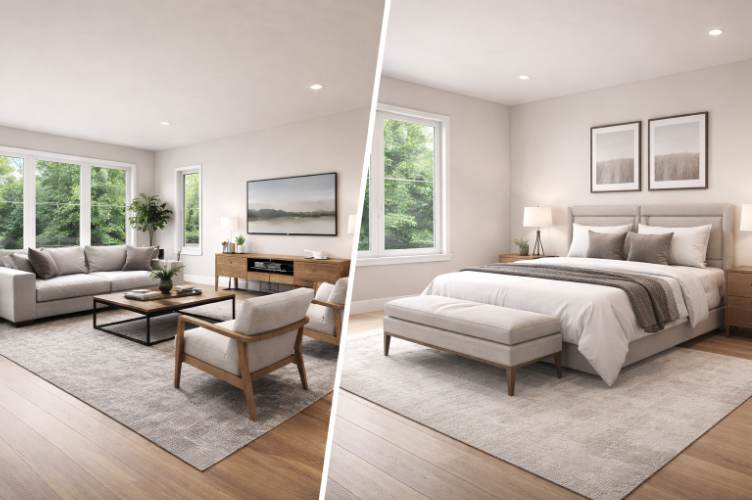
Living rooms usually shape the first impression because they reveal how the space functions in real use. Buyers read scale, movement, and furniture fit almost instinctively in these areas. Bedrooms tend to reinforce that impression by signaling comfort and proportion. Other rooms receive attention later, once curiosity has already formed. When staging ignores this progression, it muddies the message and weakens clarity.
At this point, how agents use virtual staging for listings becomes a matter of visual clarity. Every staging decision either simplifies the layout or complicates it. When staging is limited and placed with intent, buyers follow the space easily. When it covers every room, clarity starts to slip.
Also Read: What Are the Best Ceiling Color Ideas for the Living Room?
How Agents Use Virtual Staging for Listings in Practice
Choosing Images That Buyers Actually Read
Agents rarely stage every photograph in a listing, and for good reason. Buyers tend to focus on a small set of images that explain how the home works. These usually include the main living space and a bedroom that reflects scale. Other photos matter later, after interest has formed.
Treating Furniture as a Spatial Reference
Virtual furniture works best when it behaves like a measuring tool. Placement follows wall lengths, window breaks, and walking paths already present in the room. When proportions feel believable, buyers stop questioning the image and start understanding the space.
Deciding Where Staged Images Appear
Staged photos are usually placed near the start of the gallery, where viewers are still forming context. Unstaged images appear later, once the layout already makes sense. This order helps buyers reconcile presentation with reality without feeling misled.
Using Staging to Clarify Purpose
Clear function matters more than visual tone. When staging shows where furniture belongs and how space flows, buyers do not have to interpret the image. This approach reflects the best virtual staging ideas to sell homes faster, built around readability and ease.
Keeping Visual Logic Consistent
Lighting tone, furniture style, and placement logic remain steady across images. Sudden shifts raise doubt. Consistency reassures buyers that what they are seeing follows a single, reliable logic.
Also Read: Can I Pay Someone to Virtually Stage My Room
Technical Rules That Keep Virtual Staging Credible
Staying Honest About Room Size
Buyers have a sharp instinct for space. They notice when a couch feels pushed too close to a wall or when a bed leaves no room to walk. Even without measuring, something feels off. When staging ignores those limits, trust slips before interest has a chance to build.
Letting the Photograph Set the Angle
Every photo already explains how the room was captured. Lines on the floor, corners of walls, and ceiling edges show depth and direction. Staged furniture has to follow that same logic. A mismatch in angles makes the furniture feel disconnected from the room itself.
Allowing Existing Light to Lead
Staging should follow the light that is already present. Windows, lamps, and natural shadows already describe how the room behaves. Added elements need to respond to that environment. When they do not, the image feels layered instead of whole.
Keeping Style Grounded in Reality
Visual styling sets expectations. A modest property dressed beyond its reality creates friction instead of appeal. When staging reflects the true character of the home, buyers are more willing to trust what they see.
Making the Gallery Feel Cohesive
Listings lose strength when each image follows a different visual idea. Shifts in tone, furniture weight, or brightness interrupt the story. Consistency allows buyers to stay focused instead of recalibrating with every photo.
Applying Virtual Staging Tips for Real Estate Agents With Judgment
This is where experience shows. Careful decisions keep staging believable and useful, helping the listing speak clearly without drawing attention to the staging itself.
Also Read: Does Virtual Staging Help Sell a House? A Clear Look at the Data
Compliance Boundaries Agents Cannot Cross in U.S. Listings
Deciding What Can Be Digitally Added Versus What Must Stay Untouched
Virtual staging allows the addition of furniture and decor only. It does not allow modification of room size, layout, or fixed elements. Agents must treat staging as an overlay, not an edit. Once a change alters how the property exists physically, it stops being staged.
Separating Presentation From Condition
Staging can help explain space, but it cannot improve the condition. Issues related to flooring wear, wall damage, or outdated finishes must remain visible if they exist in the original photo. Buyers expect the staged image to reflect what they will actually walk into.
Managing Disclosure at the Listing Level
Staged images need to be obvious as staged images while someone is scrolling through the listing. A buyer should not have to infer, guess, or read fine details to understand what has been digitally added. When the distinction is clear upfront, there is no backtracking later during showings or follow-up conversations.
Avoiding Expectation Drift Before Showings
Buyers walk into a showing with a picture already formed in their head. If that picture does not match what they see, the mood changes fast. Questions shift, attention drops, and the showing loses traction. When the listing images stay close to reality, the visit stays focused and productive.
Also Read: Staging Closets for Home Sale
Mistakes That Cost Virtual Staging Its Value
Staging rooms that do not help a buyer understand the layout
Filling small spaces with furniture that would not fit in reality
Changing furniture style from image to image without reason
Showing unstaged photos first and staged photos later
Suggesting finishes or upgrades that are not part of the property
Blocking natural movement paths through the room
Making the room look styled but harder to understand
Creating images that do not match what buyers see during a showing
Conclusion
Virtual staging works when it stays disciplined. Buyers are not persuaded by styling on its own. What holds their attention is how easily they can read the space. When images explain layout, scale, and use without effort, showings move forward with fewer questions. Problems start when staging stretches reality or tries to impress instead of informing. Interest fades the moment buyers realise the home does not match the picture they formed online. The real lesson from these virtual staging tips for real estate agents is straightforward. Staging should make evaluation easier, not louder. Listings that stay aligned with this idea tend to progress with less resistance and more productive conversations.
Put Strategy Behind Every Staged Image
Use staging that explains space, not decorates it. Deco’s virtual staging services are built for listing accuracy, buyer clarity, and faster decisions. Make your visuals work as hard as your pricing strategy.
FAQs
1. How many photos should be virtually staged in a typical listing?
Most listings perform better when staging is limited to three to five images. These usually include a main living area and a bedroom. Staging more than that rarely improves understanding and can make buyers question accuracy.
2. Can virtual staging be used on partially furnished homes?
Yes, but only when existing furniture does not help explain the space. Virtual staging works best when it replaces confusion with clarity. Mixing real and virtual furniture in the same room usually creates visual conflict.
3. Should agents show unstaged photos alongside staged ones?
Including unstaged images later in the gallery helps buyers reconcile presentation with reality. This approach reduces surprise during showings and supports trust without weakening the impact of staged images placed earlier.
4. Does virtual staging affect buyer expectations during walkthroughs?
Absolutely. Buyers arrive with the images already in mind. When the space matches what they saw online, the visit stays focused. When it does not, attention drops fast and the conversation changes direction.
5. Is virtual staging useful for higher priced listings?
It can be, but expectations are stricter. Buyers at higher price points notice scale, finishes, and realism immediately. Staging must reflect the actual quality of the property or it risks undermining confidence instead of supporting it.
Ready to transform your listings?
Experience the power of AI-driven virtual staging with Deco.


