
If you work in real estate, you already know buyers do not skim past kitchen photos. They stop there longer than anywhere else. They zoom in, compare finishes, and quietly judge how livable the space feels. A kitchen often sets the emotional tone for the entire listing, even when the rest of the home looks fine.
Problems start when the kitchen feels unfinished or visually cold. Empty counters and bare layouts force buyers to imagine too much on their own. Many simply move on instead. Virtual kitchen staging helps control that moment by showing the kitchen as a usable, realistic space rather than a blank one.
Kitchens anchor decision-making in subtle ways. Buyers look for flow, usable surfaces, and everyday comfort before they ever think about design trends. Virtual staging allows that story to be shown clearly. Instead of relying on imagination, buyers are given visual context. That shift matters when applying kitchen staging for homebuyers across competitive listings.
Why Virtual Kitchen Staging Matters
Before focusing on the process, it helps to understand why kitchens respond especially well to virtual staging.
Traditional staging requires coordination, physical furniture, and repeated adjustments. Once placed, the setup stays fixed, even if buyer feedback suggests otherwise. Kitchens suffer most under those limits because preferences differ sharply between buyer segments.
Virtual kitchen staging removes that rigidity. Layout emphasis can change, finishes can be refined, and overall tone can be adjusted without touching the physical space. Buyers notice when a kitchen feels intentional rather than accidental. That clarity influences how confidently they engage with a listing, which is why modern kitchen staging tips increasingly lean digital.
Step-by-Step Guide to Staging a Kitchen
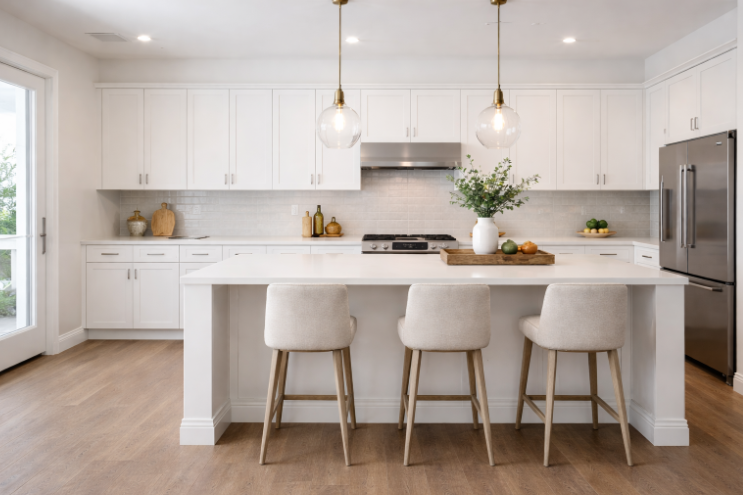
Virtual staging becomes manageable once the process is treated as a sequence rather than a single action.
Start with a High-Quality Photo
Everything depends on the base image quality. Even strong staging tools cannot fully correct a poorly prepared photo.
Pay attention to:
Natural light conditions during shooting hours
Angles that show counter depth and walking space
Clean surfaces without daily-use clutter
Neutral surroundings that accept visual edits cleanly
Strong source photos reduce artificial-looking results later.
Upload the Photo
Once the image is ready, upload it to the staging platform. Tools like Deco read existing structures such as cabinetry, appliances, and counters. This alignment keeps edits grounded in reality rather than layered on top of it.
Choose a Staging Style
Style decisions should reflect likely buyers, not personal taste. That flexibility is a major advantage of virtual kitchen staging.
Common approaches include:
Contemporary kitchens that stay visually quiet and let layout do the work
Warmer styles that feel lived-in without pushing furniture or decor too far
Elevated designs where materials register clearly but never overpower the room
When the look feels familiar instead of styled, kitchen staging for homebuyers tends to land better.
Add Essential Kitchen Elements
Furniture and decor choices should follow how the kitchen is actually used, not how it looks in catalog photos. Once too much is added, the space starts feeling forced.
Useful additions often include:
Bar stools placed where someone would actually stop and sit
Small accents, such as plants or bowls, that suggest use without stealing attention
Lighting that makes prep areas feel workable, including pendants or under-cabinet options
Surface changes when existing finishes pull focus for the wrong reasons
These kitchen staging tips make the space easier to understand at a glance.
Highlight Functionality
A kitchen gains credibility when it looks workable before it looks styled. Visual choices should reflect normal routines rather than ideal setups.
Show elements such as:
Prep areas that feel accessible without explanation
Storage that looks reachable instead of overly arranged
Seating layouts that leave movement feeling natural
Function-forward visuals lower hesitation during buyer evaluation.
Keep It Realistic
Restraint matters more than decoration during kitchen staging. Overfilled spaces lose credibility quickly. Neutral tones with a few grounded accents usually feel right. The strongest virtual kitchen staging does not call attention to itself because it mirrors how the kitchen would look during regular use.
Benefits of Staging a Kitchen with Deco
Virtual kitchen staging changes how buyers react to a kitchen before they read anything else.
Captures Buyer Imagination
Buyers spend more time on kitchens that feel settled. When counters, seating, and movement make sense, they start picturing everyday use instead of questioning the space. That shift usually happens without them realizing it, which is why kitchen staging for homebuyers plays such a critical role in early interest.
Helps Homes Sell Faster
Listings slow down when buyers hesitate early. Kitchens that look finished remove that pause. More clicks turn into longer views, and longer views turn into follow-up questions instead of quick exits, especially when practical kitchen staging tips are applied with intention.
Experiment Without Commitment
Some kitchens need adjustment after feedback comes in. Virtual kitchen staging makes that possible without moving furniture or resetting a space. Styles can change, layouts can be refined, and the listing stays flexible while still aligning with kitchen staging for homebuyers across different preferences.
Final Thoughts
Most buyers decide how they feel about a kitchen before reading anything else. Buyers lose interest when a kitchen feels unclear or incomplete. Virtual kitchen staging creates a visual structure that photos alone cannot provide, without locking the seller into lasting changes. When buyers understand how the kitchen fits daily life, they linger longer, ask better questions, and engage more seriously. That difference shows up in viewing behaviour first, and offers later.
Stage Your Kitchen With Deco
Deco’s virtual kitchen staging services help realtors present kitchens with accuracy and buyer appeal. Show layout, function, and style clearly without delays or physical staging costs.
FAQs
What is virtual kitchen staging and how does it work for homebuyers?
When buyers scroll through listings, they want to understand the kitchen quickly. Virtual kitchen staging fills in what an empty or dated photo cannot show. Instead of guessing where things fit, buyers see how the space actually works.
Why should I consider virtually staging my kitchen before selling my home?
Unstaged kitchens force buyers to do mental work, and most will not. Virtual staging removes that friction. It shows the kitchen as usable and finished, without committing to physical changes that might not suit every buyer.
What are the key benefits of virtual kitchen staging compared to traditional staging?
Traditional staging fixes the kitchen into one version. Virtual kitchen staging keeps it flexible. If something feels off, it can be adjusted. No moving furniture, no scheduling delays and no sunk costs.
How much does virtual kitchen staging usually cost?
Costs depend on how many photos you stage and how detailed the changes are. Even then, it stays well below physical staging expenses, especially when listings need revisions after buyer feedback.
What kitchen features should be highlighted when virtually staging a home to impress buyers?
Buyers notice counter space, storage access, lighting balance, and movement first. Decorative details matter less. When everyday use feels clear, buyers stay longer and look closer.
Ready to transform your listings?
Experience the power of AI-driven virtual staging with Deco.


