
For realtors, marketing properties has never been as simple as uploading a few photos and waiting for interested buyers to reach out. The market in 2026 will feel crowded in a different way, and the pace is quicker than most people expected. Buyers move through listings almost automatically, making decisions in seconds. When something doesn’t look right or feels unfinished, they swipe away without a second thought. That is exactly where many real estate marketing mistakes quietly begin, and these issues tend to snowball when not corrected early.
Plenty of experienced agents fall into the same routines they have used for years. It doesn’t happen because they lack skill. It happens because buyer behavior changed faster than the marketing habits built around older markets. Understanding how to fix realtor marketing mistakes starts with seeing where attention drops and why buyers tune out before the listing gets its chance.
Also Read: Virtual Staging
Top 6 Mistakes Realtors Make when Marketing Properties
Let’s break down the most frequent missteps realtors make and how you can avoid them.
Mistake 1: Using Low-Quality or Generic Photos
One of the biggest real estate marketing mistakes shows up right at the top of every listing. Low-quality photos make a property look smaller, darker, and far less inviting. Odd angles, heavy shadows, clutter, and outdated lighting tricks buyers into thinking the home has issues that may not exist. Stock photos create a completely different problem because they disconnect the buyer from the property and raise quiet doubts about accuracy.
Buyers form impressions very quickly while scrolling. When photos feel careless, the listing loses momentum before the description even starts working. That kind of damage is tough to recover from because buyers rarely revisit listings they only half-trusted the first time.
The Fix:
Use clean, well-lit photography or virtual staging. Virtual staging allows outdated or empty rooms to feel more balanced and usable without misleading buyers. When shots look intentional rather than rushed, buyers slow down and spend more time understanding the home.
Mistake 2: Ignoring Virtual Staging Opportunities
Plenty of listings still go live with empty rooms that look cold and unfinished. Most realtors do it because they assume buyers will picture the layout themselves. It rarely works that way in real life. Empty rooms feel larger sometimes, but they feel confusing far more often.
This is another example of subtle real estate marketing mistakes that drain interest without creating any obvious warning signs.
The Fix:
Virtual staging fills the gaps quickly. A room can be staged in different styles depending on your target buyer. Sleek modern furniture might appeal to professionals, while warmer tones fit families better. When buyers see a room with meaning attached, they usually respond with curiosity instead of uncertainty.
Also Read: Virtual Staging for MLS Listings: What to Know
Mistake 3: Writing Vague or Feature-Heavy Descriptions
A lot of listing descriptions sound interchangeable. They list features such as the number of bedrooms, the size of the kitchen, and whatever upgrades the seller remembers. Buyers need details, but they also need a sense of what living in the home feels like. When descriptions rely too heavily on features, the listing blends into every other property competing for attention.
This remains one of the easiest real estate marketing mistakes to miss because the writing looks complete even when it doesn’t connect emotionally.
The Fix:
Shift toward describing experience rather than listing features alone. Talk about morning light in the living room or how a kitchen feels during a weekend breakfast. These details help buyers stay mentally inside the property longer, which is exactly how to fix realtor marketing mistakes tied to weak engagement.
Mistake 4: Overlooking Social Media as a Marketing Channel
Some agents still treat MLS as the primary arena for all listings. That approach ignores how buyers discover properties today. Many buyers find homes through Instagram, TikTok, Facebook, and sometimes even LinkedIn. These platforms shape early impressions long before buyers reach official listing pages.
Ignoring social media is one of the quieter real estate marketing mistakes, but the missed exposure can be significant.
The Fix:
Reuse your best visuals across platforms. Staged photos, short clips, and simple room variations work well as scroll-friendly content. When buyers see the same property consistently across different places, they begin to remember it without effort.
Mistake 5: Not Leveraging Data and Engagement Insights
Many agents create content without checking what actually resonates. Without insight into what buyers click on or share, decisions eventually drift into unhelpful habits. Marketing without feedback becomes guesswork, and guesswork wastes both time and opportunities.
The Fix:
Track which staging styles hold attention, which rooms stop the scroll, and which visuals generate the longest viewing time. Some buyers prefer minimal design. Others react strongly to warmer spaces. Understanding these signals helps refine future listings and supports how to fix realtor marketing mistakes through practical adjustments.
Mistake 6: Treating All Buyers the Same
Different buyer groups look for different things, and ignoring this truth creates messaging that misses the mark. Investors think differently than families. First-time buyers react differently than downsizers. A single marketing style rarely fits all groups well.
This uniform approach remains one of the most common real estate marketing mistakes because it hides behind effort rather than outcome.
The Fix:
Use visualization tools that allow each listing to adapt to different buyer types. A condo can feel sleek and urban for professionals, while a warm, softer version works better for families. Tailored visuals make listings feel more relevant without adding heavy workload.
Also Read: How Much Does Virtual Staging Cost in the USA?
Why Fixing These Mistakes Pays Off
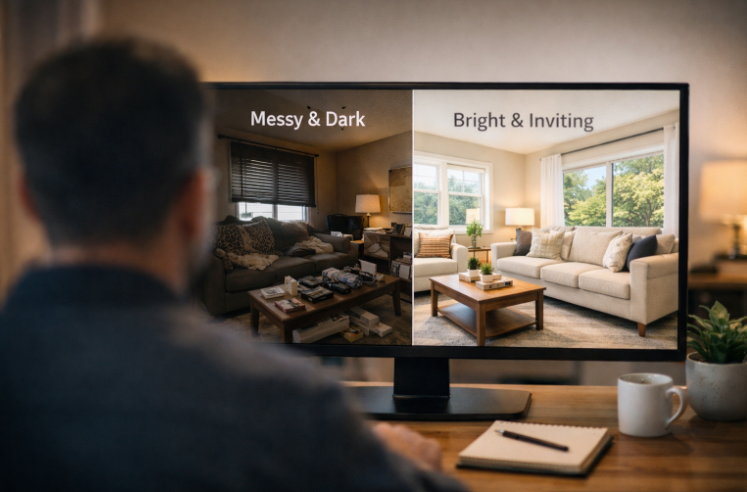
Correcting these issues does more than make a listing look polished. Staged homes consistently sell faster, draw more attention, and generate longer time-on-page. Strong visuals reduce buyer hesitation early. Avoiding real estate marketing mistakes improves clarity. Knowing how to fix realtor marketing mistakes improves outcomes long after the listing goes live.
Smarter Marketing Starts with Smarter Tools
Realtors working in today’s digital-heavy market cannot rely on outdated habits. Weak visuals, missed staging opportunities, generic writing, and one-size-fits-all messaging all slow momentum. Buyers pick up on these gaps quickly, even when they cannot explain why something feels off.
Start Turning Views Into Serious Buyer Interest
Deco helps realtors present listings with clarity without increasing overhead.Use flexible visual tools that adjust easily to buyer behavior and deliver consistent presentation. See how AI-powered staging can help your listings turn attention into real conversations and steady movement toward closing.
FAQs
How do realtors notice their marketing slipping before it becomes a bigger problem?
Usually it shows up in tiny ways first. A listing gets views, but nobody saves it. People open the page, yet they leave almost immediately. Even small questions from buyers feel scattered because the presentation didn’t guide them well. When those patterns show up together, something in the marketing is not landing the way it should.
Why do some listings with great features still struggle online?
Sometimes the home is fine, but the way it appears on a screen doesn’t capture any of its strengths. A hallway feels narrow, a kitchen loses its warmth, or the photos flatten the rooms in strange ways. Buyers look fast, and if the visuals don’t translate the real feeling of the place, they move on before any of the strong points register.
What usually goes wrong when realtors depend only on standard listing photos?
Standard photos miss a lot of context buyers expect today. They don’t explain flow, they don’t show scale clearly, and they rarely highlight how people would actually use the space. Without those cues, buyers feel unsure, and uncertainty kills interest faster than most agents expect.
How can tone in the listing description shift buyer perception without changing any facts?
The tone sets the mood before buyers even think about details. If the writing sounds rushed or stiff, the home can feel the same way. When the wording feels steady and grounded, buyers picture calmer daily life inside the property. That little shift changes how they judge almost everything else.
Why do small visual inconsistencies confuse buyers during online browsing?
People build impressions quickly. When the staging in one room looks sleek and another room suddenly feels heavy or outdated, buyers lose the thread. They stop trusting the flow. The home feels disjointed, even if it isn’t. That break in continuity pushes them toward other listings that feel easier to understand.
How can realtors tell when a room needs a second staging version?
It becomes obvious when buyer groups have very different priorities. A young buyer may want a workspace. A family may picture a reading corner or extra storage. If the same room keeps triggering different questions, showing more than one version usually answers those questions without saying a word.
Ready to transform your listings?
Experience the power of AI-driven virtual staging with Deco.


