
Bathroom projects in the United States tend to feel more complex than other interior upgrades because every decision touches plumbing, airflow, or electrical load in some way. Even small changes require an understanding of how these systems behave once the room fills with heat and moisture. Many older homes compound the challenge with aging pipes and limited ventilation paths that make full remodels expensive. Market research from Global Market Insights notes steady growth in the national bathroom improvement segment, driven mostly by functional updates rather than full tear-outs. That pattern reflects how people approach their own homes. They look for bathroom makeover ideas that lift the room’s performance without rewriting the entire plan. They also lean on bathroom remodel ideas on a budget that respect the existing mechanical layout. When paired with thoughtful bathroom layout ideas, these updates help the space work better without introducing unnecessary risk or cost.
Understanding How U.S. Bathroom Costs Are Built
Bathroom remodeling costs usually reflect labor patterns more than anything else. Tile specialists, plumbers, and electricians charge rates that vary by region, but the trend remains consistent across the country. Labor grows quickly when demolition and relocation come into play. Materials are the second largest category, followed by finishes and accessories that homeowners choose after the larger decisions are made. When people look for bathroom remodel ideas on a budget, most savings come from reducing labor hours and keeping the layout untouched. A remodel becomes financially predictable when updates work around the existing plumbing, existing wiring, and even the original footprint of the vanity or tub. Once those basics stay fixed, the rest of the project opens up.
Surface-Level Enhancements With High Impact
Cosmetic work forms the core of most budget projects because it delivers fast change. Surfaces guide the eye before anything else, and they are usually the easiest to refresh.
Moisture-Resistant Paint for Daily Durability
The walls absorb more steam than any other surface. Choosing a mildew-resistant paint gives the bathroom a cleaner look and prevents the soft, dull finish that appears over time. Lighter shades bounce light around the room, which helps small bathrooms feel less compressed. Satin or semi-gloss finishes clean well and hold up in humid climates.
Tile and Grout Rescue Techniques
The tile itself ages slowly. It is the grout that usually signals decline. A deep scrub, followed by regrouting or a grout tint, creates an instant lift. This works well for shower walls, vanity backsplashes, and older floors. Homeowners who prefer a complete color change can use a tile refinishing kit, which requires patient surface prep but rewards with a smooth, even finish.
Lighting and Mirror Adjustments
Lighting can fix what paint alone cannot. LED fixtures with warm or neutral tones make skin tones look natural and reduce shadows near the vanity. A new mirror, particularly one that is framed or slightly larger than the old one, pulls the room together in a subtle but noticeable way.
Practical Fixture Upgrades With Long-Term Value
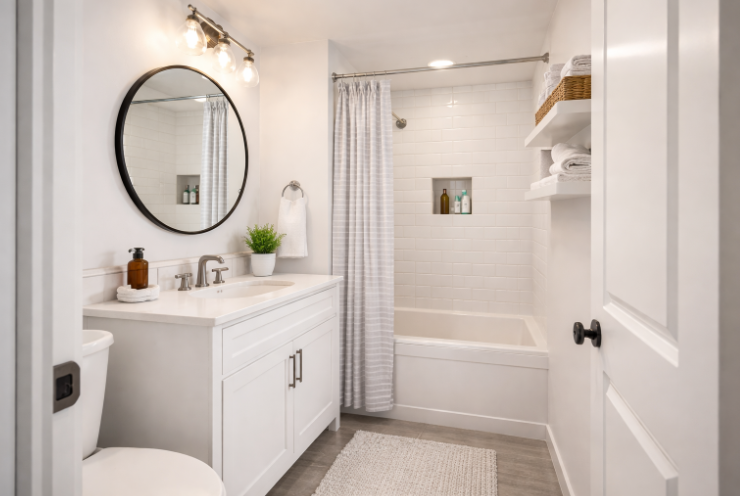
Fixtures influence water use, comfort, and maintenance. Replacing them can be a smart first step.
WaterSense Rated Toilets and Faucets
A modern toilet uses far less water than older units. These changes show up on utility bills in regions with rising water prices. Low-flow faucets also reduce consumption without hurting daily comfort. The combination of both lowers the long-term operating cost of the bathroom.
Shower Performance Choices
A showerhead upgrade feels small, yet it changes the room’s character. Multi-setting options allow you to adjust spray patterns depending on preference. Anti-clog designs make cleaning easier. For homes with lower municipal pressure, choosing pressure-balancing models helps maintain a steady flow.
Improving Ventilation
Steam trapped inside a bathroom leads to peeling paint and gradual moisture damage. A fan with the right cubic feet per minute rating for the room improves air quality and keeps all other upgrades in better condition. A timer switch keeps ventilation consistent after each shower or bath.
Budget Storage, Vanity, and Cabinet Improvements
Storage plays a larger role in comfort than people assume. When towels, toiletries, and cleaning supplies have a defined place, the room feels calmer and easier to maintain.
Refacing Instead of Replacing
Many vanities remain structurally strong. Refacing them with new door panels or drawer fronts preserves the base while updating the look. This approach costs far less than replacing the entire unit. A fresh coat of paint adds even more life to older cabinetry.
Floating Shelves and Mounted Units
Most bathrooms have empty vertical spaces that never get used. Installing narrow shelves above the toilet or adding a slim cabinet beside the vanity introduces new storage without crowding the room. Recessed shelves work well when wall depth permits, especially for holding small bottles inside the shower or near the sink.
Upgraded Hardware
Small details influence design more than expected. Replacing outdated knobs and pulls with modern metal finishes helps create a cohesive appearance. Stainless steel, nickel, and matte black finishes resist corrosion, which is important in humid environments.
Affordable Flooring and Countertop Refresh Options
Floors and counters take significant wear, but they do not always need full replacement.
Peel and Stick Vinyl Flooring
Modern vinyl flooring options offer water resistance and comfortable walking surfaces. Peel-and-stick tiles work for flat subfloors and can be installed in a single afternoon. Floating vinyl planks are thicker and more durable, making them a useful choice for heavily used bathrooms.
Countertop Refinishing Kits
Epoxy, concrete overlays, and laminate refresh kits can renew old countertops at modest cost. These products create a smooth finish, but they require careful cleaning and steady application. Once cured, the counter looks completely different without a full replacement. This is a strong solution for homes awaiting a future remodel.
Using Bathroom Layout Ideas Without Moving Plumbing
The most effective savings strategy is to keep plumbing exactly where it is. Once the supply and drain lines stay untouched, a wide range of bathroom layout ideas becomes possible.
Learning the Wet Wall Pattern
Every bathroom has one or more walls that carry the plumbing lines. These walls are expensive to alter. Understanding which wall holds these lines helps homeowners determine which upgrades are safe and which ones demand professional intervention.
Reorganizing the Room Within Its Current Boundaries
Moving mirrors, adjusting shelving positions, and choosing new vanity depths can help the bathroom feel more open. Towel bars, hooks, and accessories influence movement patterns through the room. By reorganizing these elements, homeowners gain clarity and space without touching structural components.
Creating a Sense of Openness
Design tricks help smaller bathrooms feel less tight. Taller mirrors create vertical stretch. Glass shower doors open the visual field. Soft, neutral colors calm the room. Even changing the direction of floor planks influences how the eye reads space. These details work together to form a smoother flow.
DIY Tasks That Extend the Budget
Some upgrades are simple enough to complete without professional help. Tackling a few of them personally reduces labor hours and keeps the project within reach.
Replacing Hardware and Caulk
Cabinet pulls, towel bars, and toilet paper holders can be replaced with basic tools. Fresh caulk around the tub and sink removes discoloration and prevents water from creeping into crevices. These changes are small but make the room look far more maintained.
Refinishing Tile, Tubs, or Cabinets
Refinishing kits help renew pieces that look worn. These kits demand careful preparation and patience during curing, but the results are rewarding. Cabinet painting is also approachable for homeowners who want a color change without replacing the unit.
Installing a Peel-and-Stick Backsplash
A peel-and-stick backsplash offers texture and color without grout. It installs quickly and works well near vanities that need a visual accent. When applied to clean, dry walls, the adhesion remains strong.
Where to Spend and Where to Save
Budget decisions become easier when you know which parts of the bathroom offer the strongest return. Water-efficient fixtures, high-quality ventilation, and moisture-resistant materials protect the home and reduce long-term maintenance. Savings commonly come from painting, refinishing, installing vinyl floors, upgrading hardware, and handling manageable DIY work. When evaluating bathroom remodel ideas on a budget, the smartest approach is choosing upgrades that solve a real problem instead of selecting changes solely for decoration.
A bathroom changes slowly over the years, so you rarely notice the small things until the room feels a little worn out. Once you start updating it piece by piece, the space responds quickly. New light, cleaner surfaces, quieter fixtures, and better storage all add up in a way that feels reassuring. It is not about chasing trends. It is about bringing back comfort and clarity. When homeowners follow steady bathroom makeover ideas and pair them with practical bathroom remodel ideas on a budget, the room becomes easier to use, easier to maintain, and far more enjoyable. Most importantly, it becomes a space that fits the rhythm of your home rather than working against it.
See Your Bathroom’s Potential With Deco
Deco shows you how a finished bathroom could look before you commit. Our virtual staging previews layouts and materials so your choices feel grounded and confident.
FAQs
How can a homeowner tell if a bathroom is ready for low-budget upgrades rather than a full renovation?
Most people start by noticing patterns that do not change over time, like persistent condensation or slow drainage. When those issues stay mild and the core systems behave reliably, smaller improvements usually make more sense than an expensive rebuild.
What early signs show that a bathroom layout is limiting daily comfort in older U.S. homes?
You can sense it when movement feels cramped, or storage ends up scattered across the room. If items constantly shift to make space for basic tasks, the layout itself is doing the work incorrectly, even before any materials show wear.
Why does lighting play such a strong role in perceived bathroom quality during budget projects?
Light reveals everything without apology. It shows uneven paint, worn grout, and clutter that hides in corners. When lighting is tuned properly, even modest updates feel more deliberate because the room becomes clearer and easier to read at a glance.
Ready to transform your listings?
Experience the power of AI-driven virtual staging with Deco.


